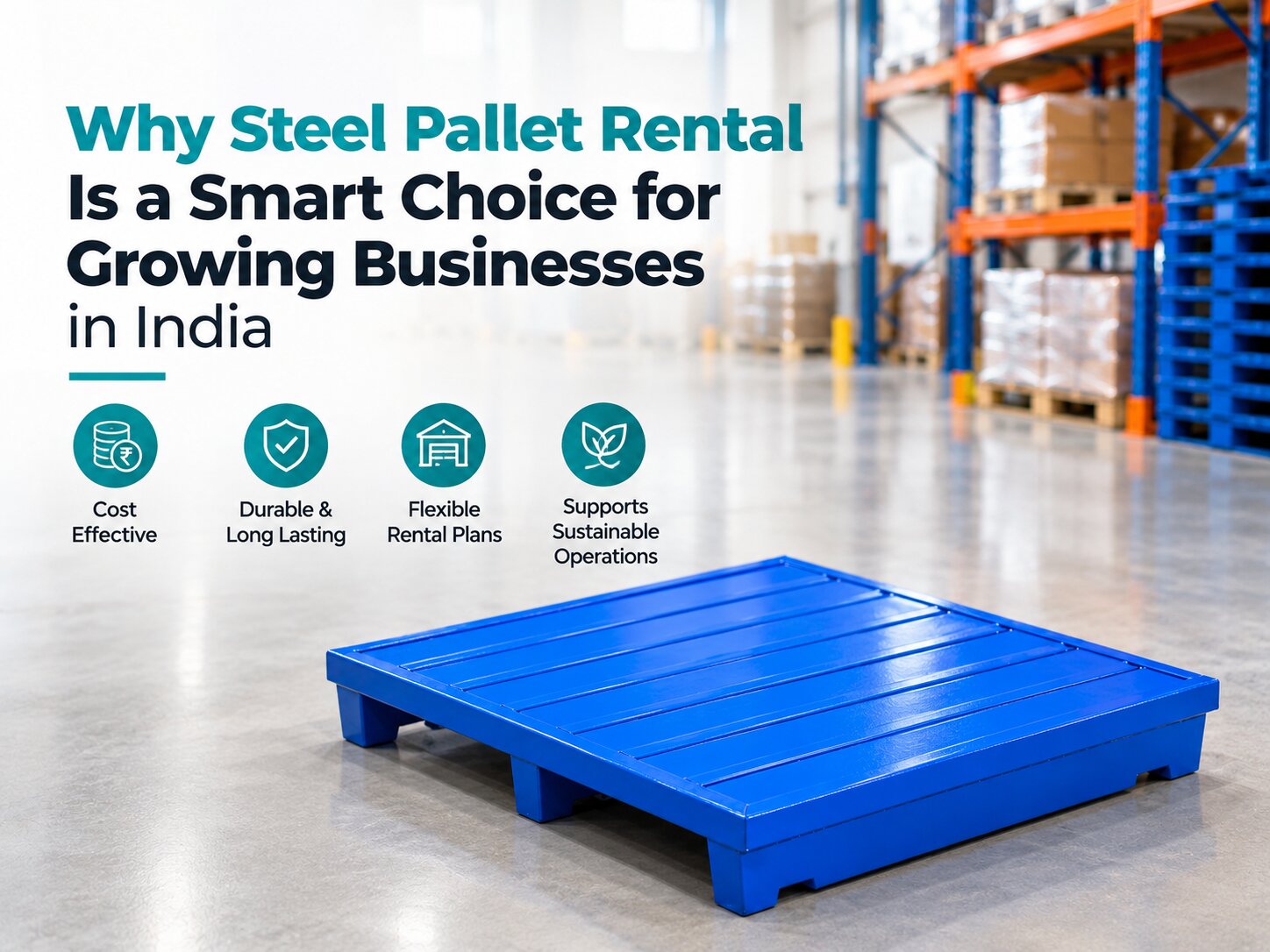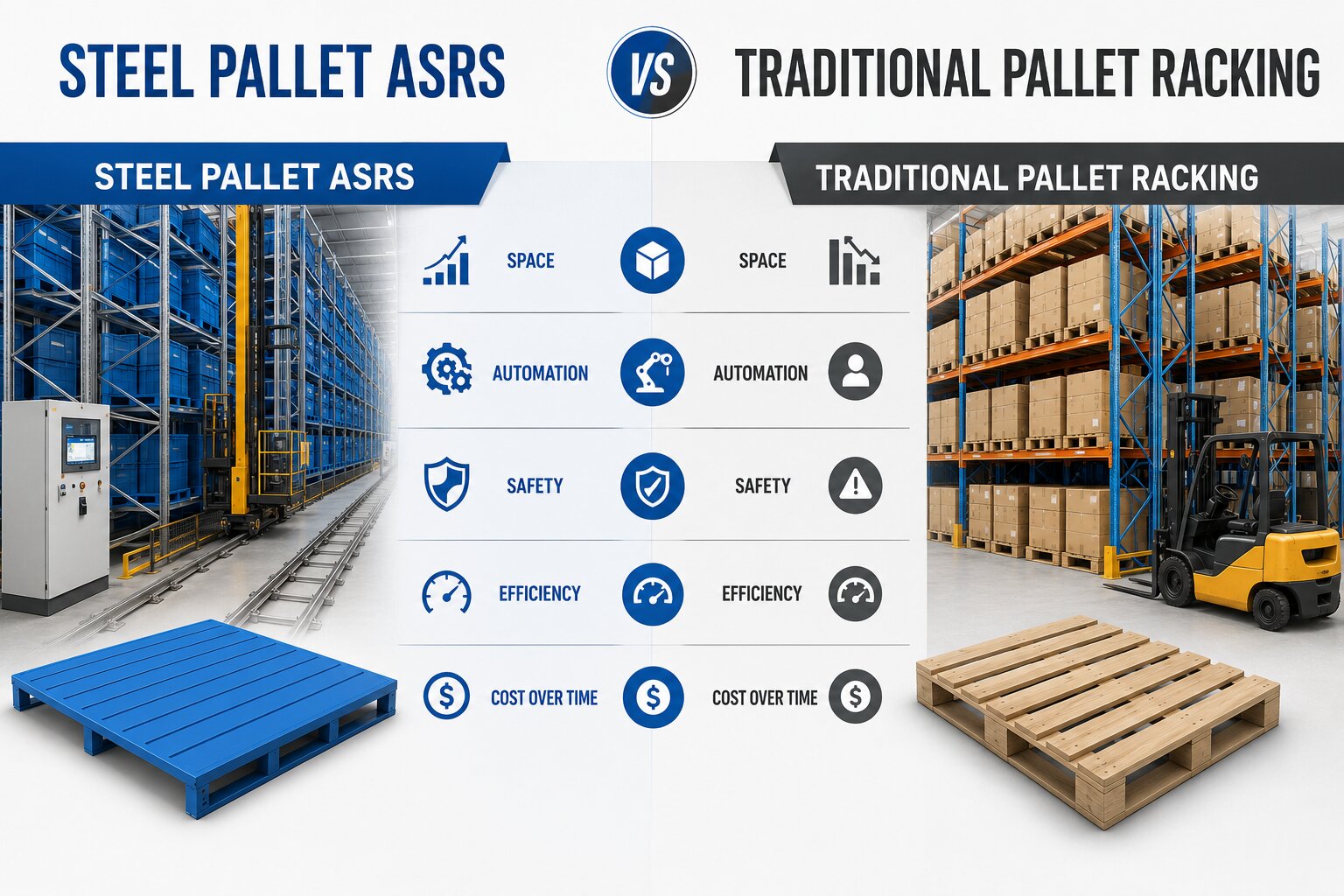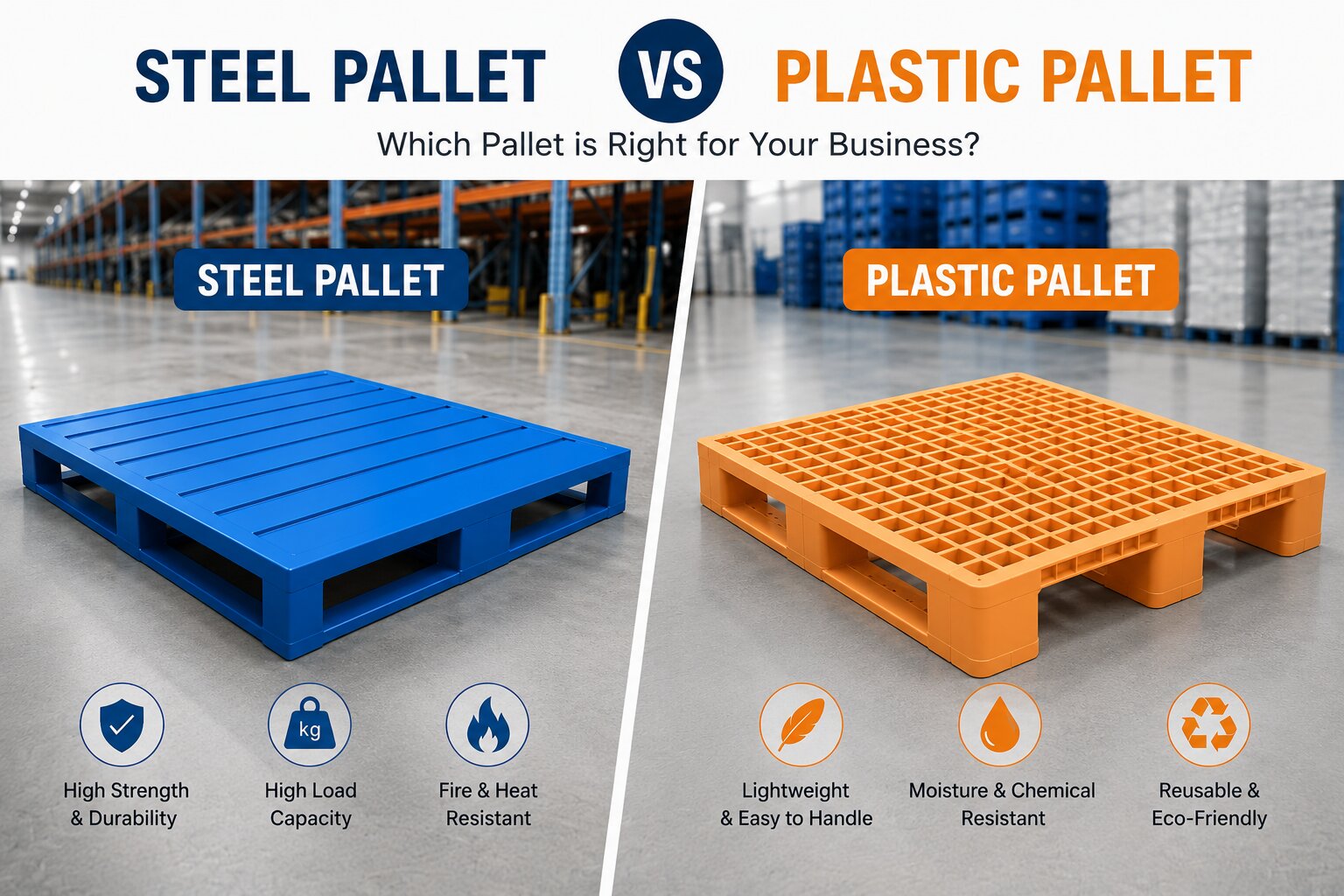
In modern warehousing and logistics, one failure is enough to disrupt the entire supply chain. That’s why leading industries are rapidly shifting toward steel pallets—the only pallet system built for extreme load capacity, zero structural compromise, and long-term industrial reliability. While plastic pallets serve light-duty applications, they simply cannot match the strength, stability, and lifecycle value of engineered steel pallet systems and ASRS Pallet Systems. At Stakall, we design heavy-duty steel pallets for industries where failure is not an option.
A steel pallet is not just a storage platform it is an industrial strength foundation system designed for:
1) Ultra-heavy load handling
2) Multi-level warehouse stacking
3) Continuous forklift movement
4) Long-term static storage
5) Harsh industrial environments
When operations demand maximum safety and zero deformation risk, steel is the only reliable solution.
Plastic Pallets: Limited by Design
Plastic pallets are widely used for lightweight and controlled environments. However, their performance is restricted when subjected to:
1) Heavy load pressure
2) Continuous racking stress
3) Impact from forklifts
4) Long-term industrial usage
Over time, plastic pallets may experience:
1) Flexing under load
2) Reduced structural integrity
3) Shorter service life in demanding environments
They are suitable for basic logistics but not for high-performance industrial operations.
|
Performance Factor |
Steel Pallets (Industry Grade) |
Plastic Pallets |
|
Load Capacity |
Extremely High (2000–5000+ kg) |
Moderate (500–1500 kg) |
|
Structural Stability |
Zero deformation risk |
May flex under heavy load |
|
Lifespan |
10–20+ years |
3–7 years |
|
Forklift Handling |
Heavy-duty continuous use |
Limited cycles |
|
High-Rack Storage |
Fully compatible |
Risk under long-term load |
|
Industrial Suitability |
Heavy engineering ready |
Light to medium duty |
Conclusion is simple:
Steel is built for strength. Plastic is built for convenience.
Many businesses assume plastic pallets are cheaper. But in real operations, the real cost is not purchase price—it is replacement, downtime, and damage risk.
As a trusted Metal Pallet Manufacturer, Stakall's steel pallets offer:
1) Long service life with minimal replacement
2) Zero breakage under heavy loads
3) Reduced operational disruption
4) High reusability across decades
5) Strong safety compliance in industrial zones
Over time, steel pallets deliver significantly higher return on investment than plastic alternatives.
Steel pallets from Stakall are widely used in:
1) Automotive manufacturing
2) Heavy engineering units
3) Metal and component industries
4) Warehousing and logistics hubs
5) Export packaging for heavy goods
6) High-density storage systems
Every pallet is engineered for maximum load stability and structural strength under pressure.
Choose steel pallets when your operations involve:
If your operation cannot afford failure, steel is not optional it is essential.
Plastic pallets are suitable only for:
They are functional but not engineered for industrial strength applications.
Stakall is a trusted manufacturer of heavy-duty steel pallet systems built for demanding industrial environments.
Our engineering focus:
1) Maximum load-bearing capacity
2) Reinforced structural design
3) Long-life industrial durability
4) Custom-built pallet solutions
5) Warehouse optimization support
We don’t manufacture ordinary pallets.
We engineer industrial strength load systems.
Plastic pallets may work for light logistics. But steel pallets define industrial reliability. When load capacity, safety, and durability matter—steel always wins. For businesses seeking reliable, long-lasting, and high-performance Warehouse Storage Solutions, Stakall delivers engineered steel pallet systems built to handle the toughest industrial challenges.
1. Which is stronger: steel pallet or plastic pallet?
Steel pallets are significantly stronger and designed for high-load industrial applications.
2. What is the load capacity of steel pallets?
Steel pallets typically handle loads from 2000 kg up to 5000 kg or more depending on design.
3. Are plastic pallets suitable for heavy loads?
Plastic pallets are suitable for light to moderate loads but not for extreme industrial weight conditions.
4. Which pallet lasts longer?
Steel pallets last significantly longer, often exceeding 10–20 years with proper usage.
5. Are steel pallets cost-effective?
Yes. Despite higher initial cost, steel pallets deliver better long-term ROI due to durability and reusability.