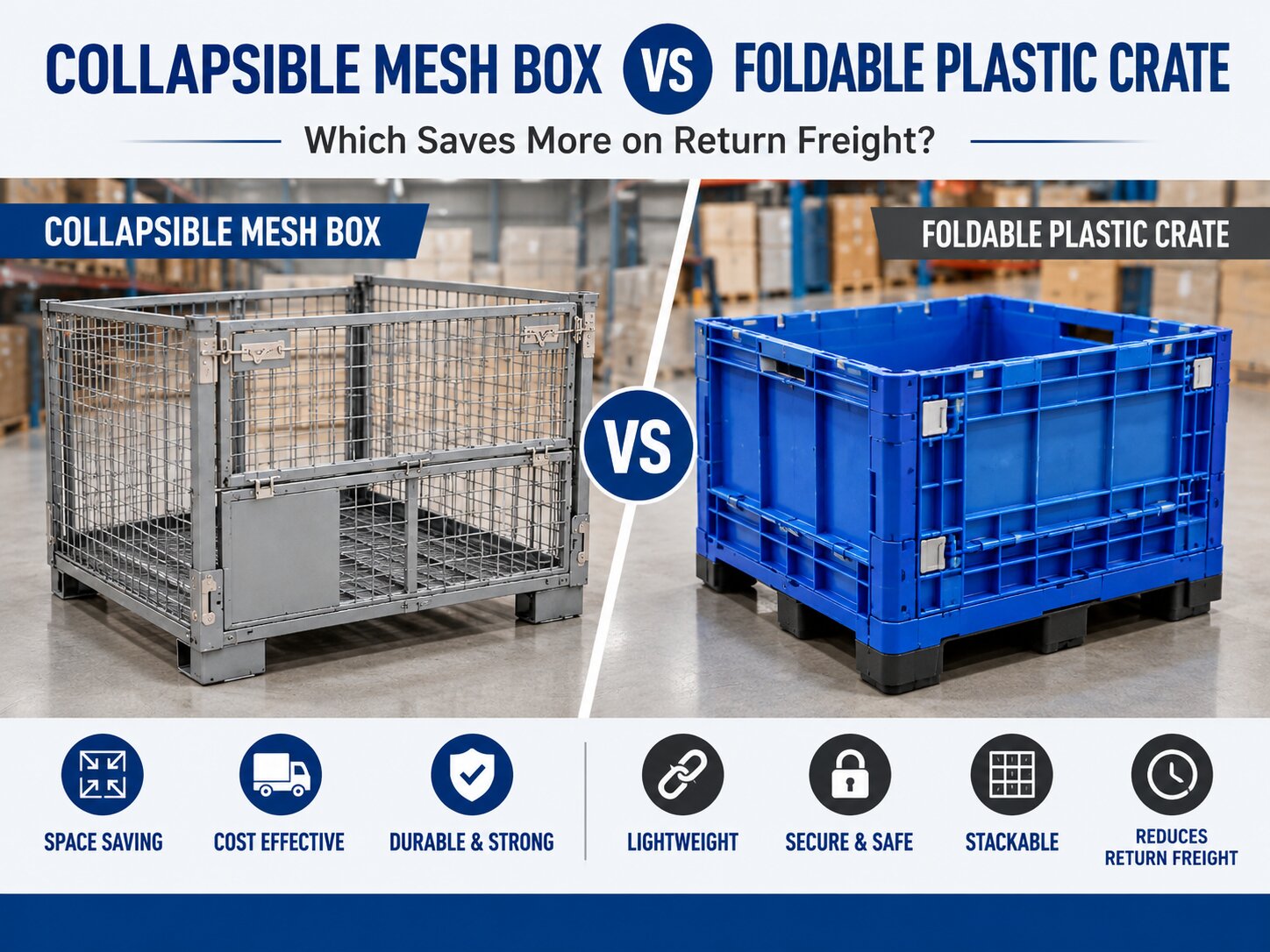
Return freight is an important cost for businesses that regularly move reusable containers between suppliers, factories, warehouses, and customers. When a container is full, its capacity matters. But when it is empty and needs to travel back, the amount of space it occupies can have an even bigger impact on transportation costs.
This is why businesses often compare a Collapsible Mesh Box vs. a Foldable Plastic Crate when looking for a better solution for reverse logistics. For industrial applications, wire mesh storage boxes can also provide a practical solution for storing and transporting components while allowing better visibility and efficient handling. Both options are designed to reduce the volume occupied by empty containers. However, the right choice depends on factors such as load capacity, durability, stacking requirements, operating environment, product type, and the number of return trips. For heavy-duty industrial applications, a steel collapsible mesh box can provide an excellent combination of strength, reusability, stackability, and return-freight efficiency.
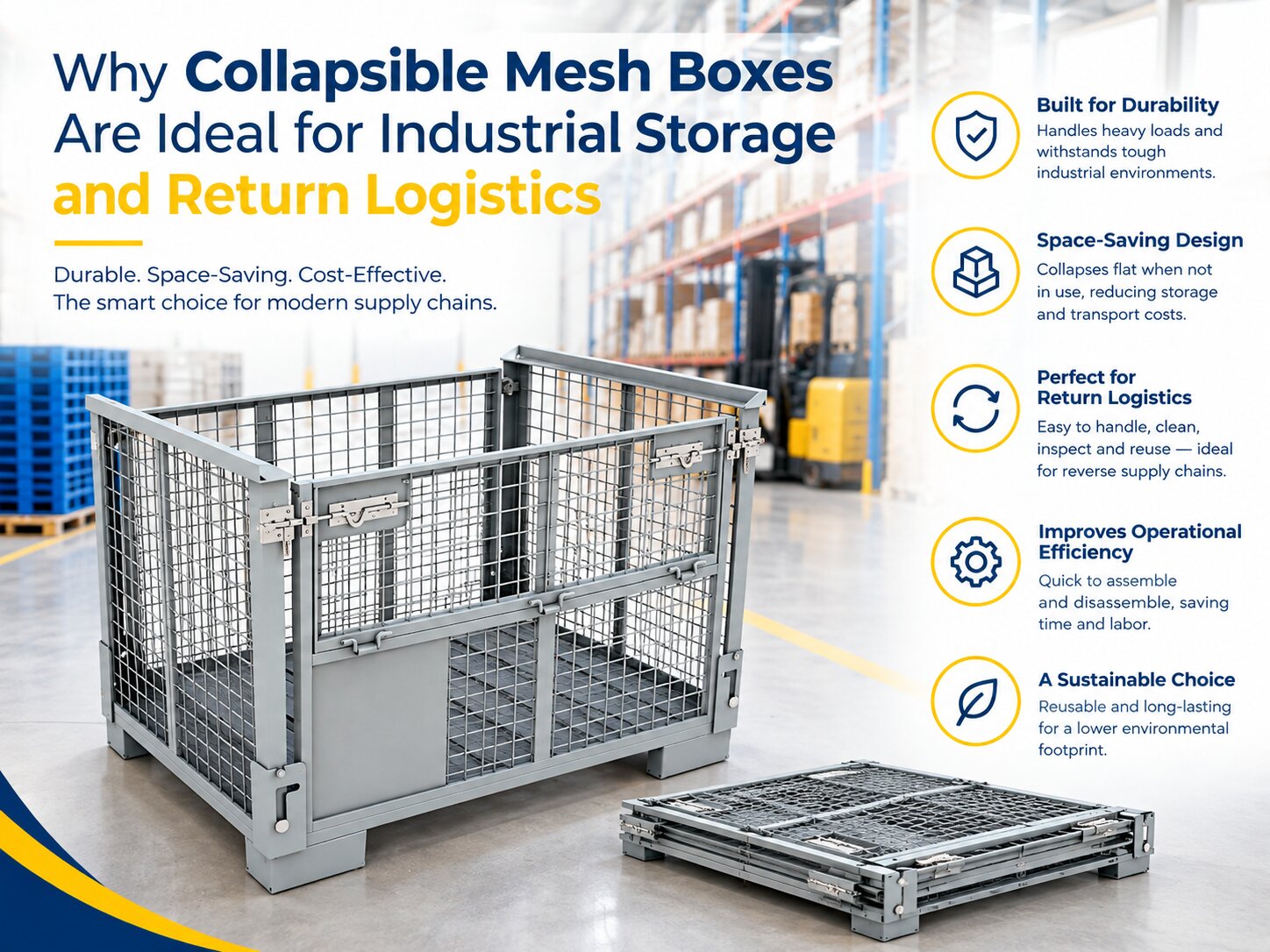
A collapsible mesh box is a reusable industrial container manufactured with a metal frame and wire mesh panels. Its sides can be folded when the container is empty, allowing businesses to reduce the space required for storage and return transportation. Unlike a conventional rigid container, a collapsible design does not need to occupy its full assembled height during the return journey.
Stakall manufactures collapsible mesh boxes using mild steel, with stated load capacities ranging from 500 kg to 1500 kg. The boxes can also be supplied with powder coating or hot-dip galvanizing, depending on the application. The open mesh construction also provides visibility of stored components and supports ventilation, making these containers useful for manufacturing, engineering, automotive, warehousing, and logistics operations.
A foldable plastic crate is generally manufactured from materials such as polypropylene or HDPE and is designed with hinged or folding sides. When empty, the crate can be folded to reduce its volume. These crates are commonly used for applications where lightweight handling, easy cleaning, and compact return transportation are important.
The amount of space saved depends on the crate design. Some foldable plastic containers can reduce their height substantially when collapsed, making them useful for returnable logistics systems. However, the key question is not simply how small a container becomes when folded. Businesses should consider the complete operating cycle, including purchase cost, load requirements, durability, handling, storage, and number of return trips.
The biggest advantage of both products is their ability to reduce empty volume. When a reusable container travels from a supplier to a customer, it is normally full on the outbound journey. After unloading, the container needs to return to the supplier or another location. A rigid container continues to occupy almost the same footprint and height when empty. A collapsible container is different. Its sides can be folded, allowing multiple empty units to occupy less vehicle and warehouse space.
1. Empty Return Volume
For businesses where containers frequently travel empty, collapsed height and stacking efficiency can directly affect transportation planning. A Collapsible Wire Mesh Container can be folded after unloading, reducing the space required for the return journey. This can allow more empty containers to be transported in the same vehicle compared with rigid containers. Foldable plastic crates can also provide strong volume reduction, particularly where the crates are designed specifically for reverse logistics. Therefore, the winner depends on the actual collapsed dimensions and how many units can safely be loaded into a vehicle.
2. Load Capacity
This is where industrial steel solutions can have a significant advantage. Heavy components, engineering parts, automotive components, castings, and other industrial materials may require a container capable of handling substantial loads. Stakall's collapsible mesh box range is currently specified with load capacities of 500–1500 kg. For businesses handling heavy materials, choosing a container only because it folds smaller may not be practical. The container must first be capable of safely handling the required load.
3. Durability and Repeated Use
Returnable packaging is normally expected to complete multiple logistics cycles. A container may be loaded, unloaded, moved by forklift, stacked, transported, emptied, folded, and returned repeatedly. Steel construction can be particularly suitable for demanding industrial environments because it provides a strong structure for repeated material handling. This makes a collapsible mesh box an attractive option for businesses that need long-term industrial storage and transportation equipment rather than lightweight packaging.
4. Warehouse Space
Return freight is not the only area where collapsible containers can create savings. Empty containers also require storage space at factories, warehouses, and distribution centres. A collapsible mesh box can be folded when not in use, helping businesses reduce the floor and vertical space required for empty units. The boxes can also be stacked, which helps organizations make better use of warehouse space. Stakall's collapsible mesh boxes are designed for stackability and industrial storage applications.
5. Product Visibility
Another advantage of a wire mesh container is visibility. Employees can often identify the stored components without completely opening the container. This can make inventory handling, picking, inspection, and warehouse organization easier. Plastic crates may provide different levels of visibility depending on whether they use solid, perforated, or mesh-style walls. For industrial components that need quick identification, the open structure of a Collapsible Wire Mesh Container can be particularly useful.
There is no universal answer because return-freight savings depend on the dimensions, collapsed height, vehicle capacity, route, freight rates, number of containers, and frequency of returns. However, the basic calculation is simple:
Return Freight Saving = Cost of Returning Rigid Containers − Cost of Returning Collapsed Containers
For example, imagine a company regularly returns empty containers after every delivery cycle. If the empty containers remain at full height, only a limited number may fit into a truck. If the containers can be collapsed and stacked efficiently, substantially more empty units may fit into the same vehicle.
This means the company may be able to reduce:
1) Number of return trips
2) Vehicle utilization costs
3) Freight cost per container
4) Empty warehouse storage requirements
5) Handling inefficiencies
The important point is that foldability creates the opportunity for freight savings, while the actual saving depends on the logistics model.
When Should You Choose a Collapsible Mesh Box?
A collapsible mesh box is particularly suitable when your business handles:
1) Heavy industrial components
2) Automotive parts
3) Engineering components
4) Metal components
5) Castings
6) Manufacturing inventory
7) Warehouse materials
8) Reusable industrial packaging
9) Products requiring frequent return transportation
If durability, load capacity, visibility, stacking, and long-term reuse are important, a steel collapsible solution may be more appropriate than a lightweight plastic crate.
Foldable plastic crates can be a practical choice when the operation prioritizes:
1) Lightweight handling
2) Easy cleaning
3) Lower container weight
4) Smaller components
5) Food or hygiene-related applications
6) Frequent manual handling
7) Moderate load requirements
8) Compact return packaging
The best solution should therefore be selected based on the complete application rather than return freight alone.
Stakall is an experienced manufacturer of industrial storage and material handling products, offering solutions for manufacturing, engineering, automotive, warehousing, and logistics applications. As a Collapsible Mesh Box Manufacturer, Stakall provides collapsible mesh boxes designed for strength, space optimization, stacking, and repeated industrial use.
The product range includes:
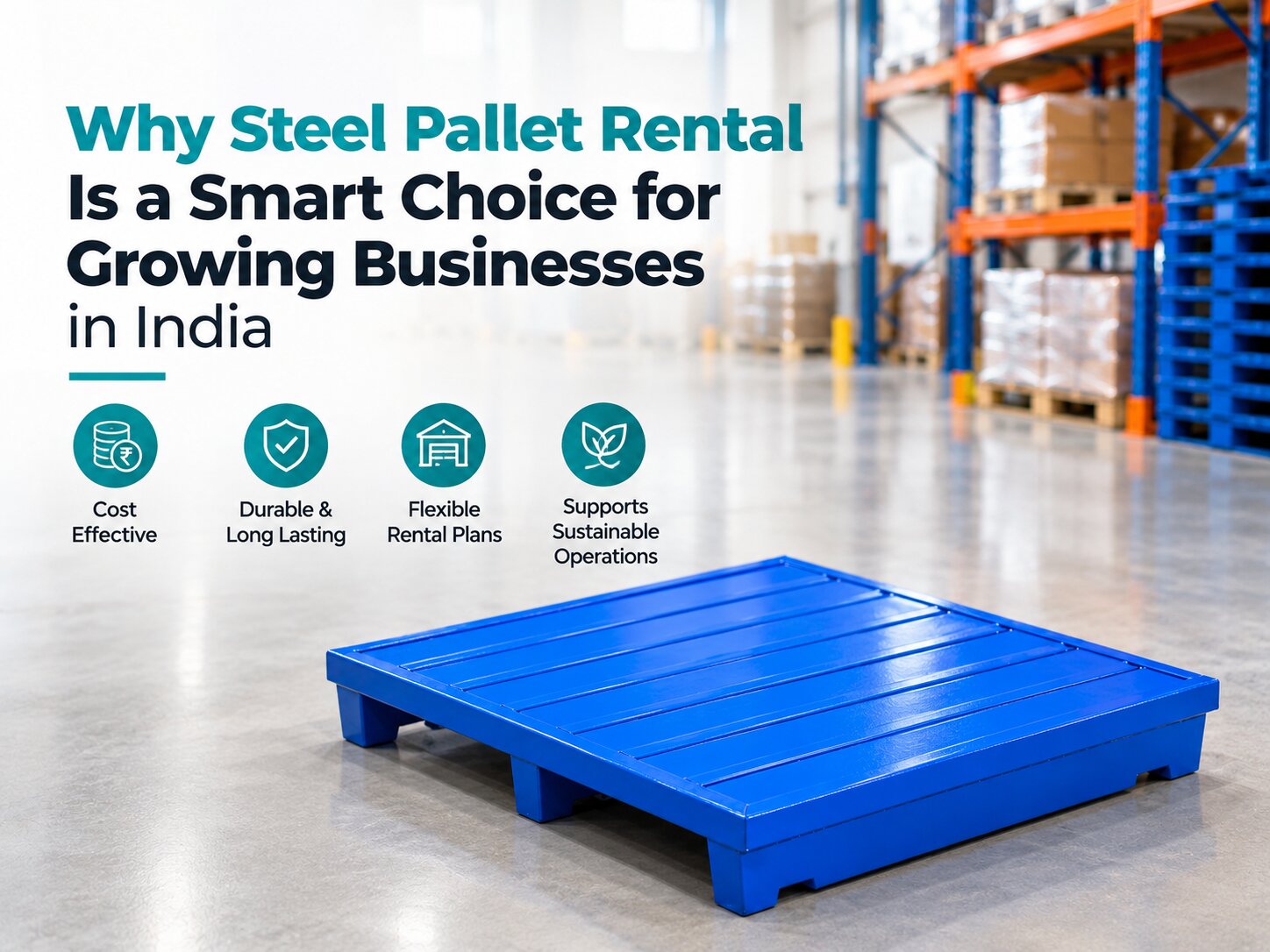
Businesses searching for Metal Pallets Manufacturer or Steel Pallets Manufacturers can also consider steel pallet solutions based on their load, handling, and storage requirements. A steel pallet can provide a durable base for industrial material handling, while a Metal Post Pallet can be useful where vertical storage, stacking, and organized handling are required. Stakall industrial storage solutions are designed to help businesses improve material handling, warehouse organization, and reusable logistics operations.
Before selecting a container, businesses should compare the following information:
1) Number of containers returned each month
2) Dimensions of the assembled container
3) Dimensions after folding or collapsing
4) Number of empty containers per truck
5) Average return freight cost
6) Number of return trips per month
7) Container purchase price
8) Expected service life
9) Load capacity required
10) Handling and stacking requirements
For example, if your current system requires multiple return trips because empty containers occupy too much space, switching to a collapsible system may improve truck utilization. The calculation should also include the expected lifespan of the container. A slightly higher initial investment can make sense if the container provides reliable performance over many logistics cycles.
Collapsible Mesh Box vs. Foldable Plastic Crate: Final Comparison
|
Factor |
Collapsible Mesh Box |
Foldable Plastic Crate |
|
Return freight |
Excellent potential for volume reduction |
Excellent potential for volume reduction |
|
Heavy loads |
Highly suitable |
Depends on design |
|
Durability |
Strong for industrial applications |
Depends on plastic type and design |
|
Visibility |
Excellent |
Depends on crate design |
|
Stacking |
Suitable for industrial stacking |
Depends on model |
|
Weight |
Higher |
Generally lighter |
|
Manual handling |
Better suited to forklift handling |
Often easier for manual handling |
|
Industrial applications |
Excellent |
Suitable for selected applications |
|
Warehouse space |
Reduced when collapsed |
Reduced when folded |
|
Long-term industrial use |
Highly suitable |
Application dependent |
When comparing a Collapsible Mesh Box vs. Foldable Plastic Crate, the option that saves more on return freight is not determined by material alone. Both solutions can reduce empty transportation volume, but the actual freight saving depends on how efficiently the containers collapse, how many units fit into a vehicle, how frequently they are returned, and how much each return journey costs.
For heavy-duty industrial applications, a collapsible steel mesh box offers additional advantages such as high load capacity, durability, stackability, visibility, and suitability for repeated handling. Stakall's collapsible mesh boxes are designed for industrial storage and material handling, with current specifications of 500–1500 kg load capacity and collapsible, stackable construction. For businesses handling heavy components and looking for a reliable Collapsible Mesh Box Manufacturer, Collapsible Wire Mesh Container, Metal Pallets Manufacturer, or Steel Pallets Manufacturers, Stakall offers a range of reusable industrial storage solutions.
The best approach is to compare the complete cost per logistics cycle—not just the initial purchase price. When return freight, warehouse space, durability, and repeated usage are considered together, the right collapsible solution can provide meaningful long-term operational value.
1. Which is better for return freight: a collapsible mesh box or foldable plastic crate?
Both can reduce empty return volume. The better option depends on collapsed dimensions, number of units returned, freight rates, load requirements, and the number of return cycles.
2. Is a collapsible mesh box suitable for heavy industrial materials?
Yes. Industrial collapsible mesh boxes are designed for applications involving components, engineering parts, automotive materials, and other industrial products. Stakall's current collapsible mesh box specifications list load capacities from 500 kg to 1500 kg.
3. What is a Collapsible Wire Mesh Container used for?
A Collapsible Wire Mesh Container is used for storing, stacking, handling, and transporting industrial components and materials. Its collapsible structure also makes it useful for return logistics.
4. How does a collapsible mesh box reduce return freight?
The box can be folded when empty, reducing the space it occupies during the return journey. This can allow more empty containers to be transported in the same vehicle and may reduce the number of return trips required.
5. Can collapsible mesh boxes be stacked?
Yes. Industrial collapsible mesh boxes can be designed for stacking, allowing businesses to use vertical warehouse space more effectively.
6. What is the difference between a steel pallet and a collapsible mesh box?
A steel pallet is primarily a load-support platform used for storing and moving materials, while a collapsible mesh box provides an enclosed or contained storage area around the load. Both can be used as part of an industrial material-handling system.