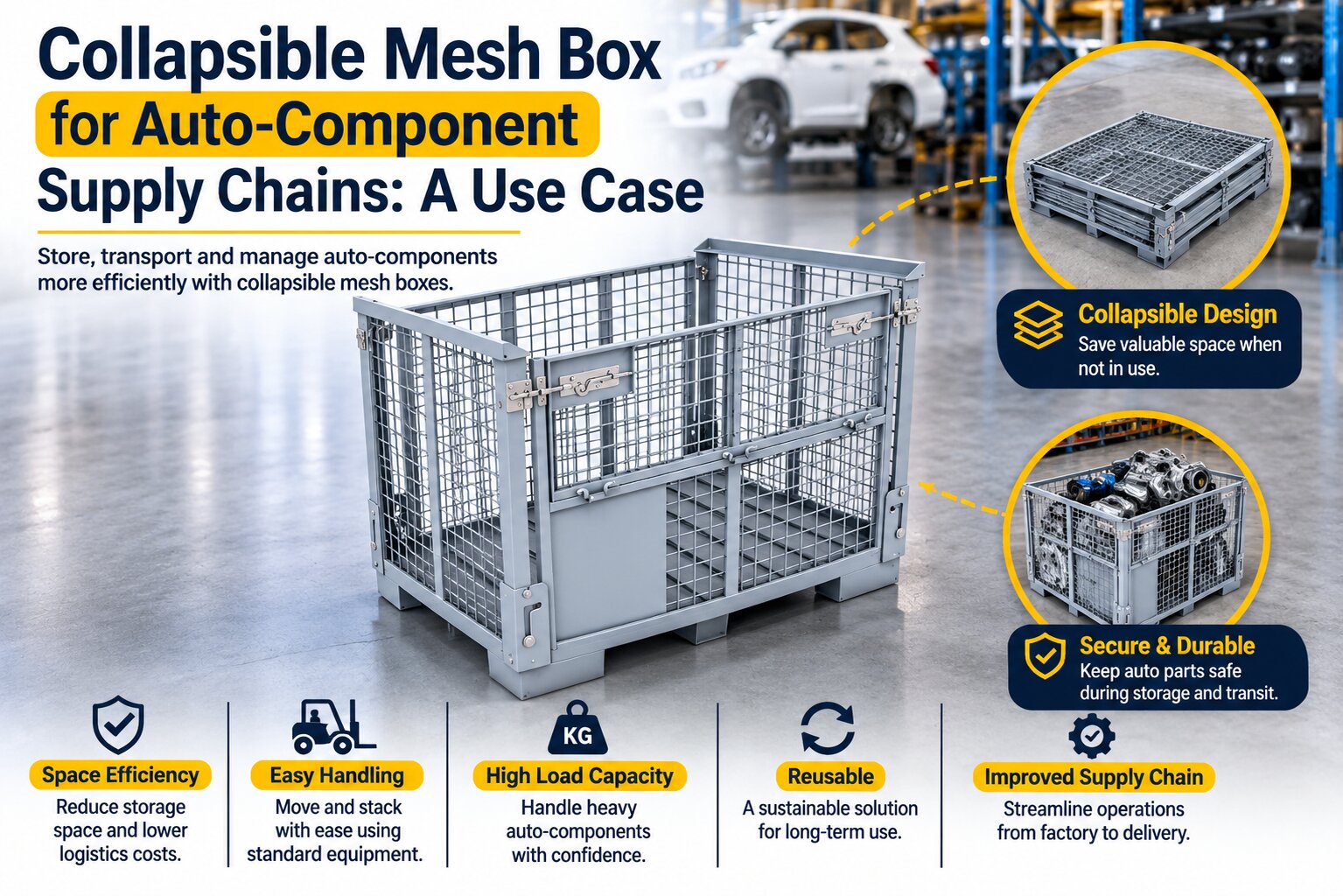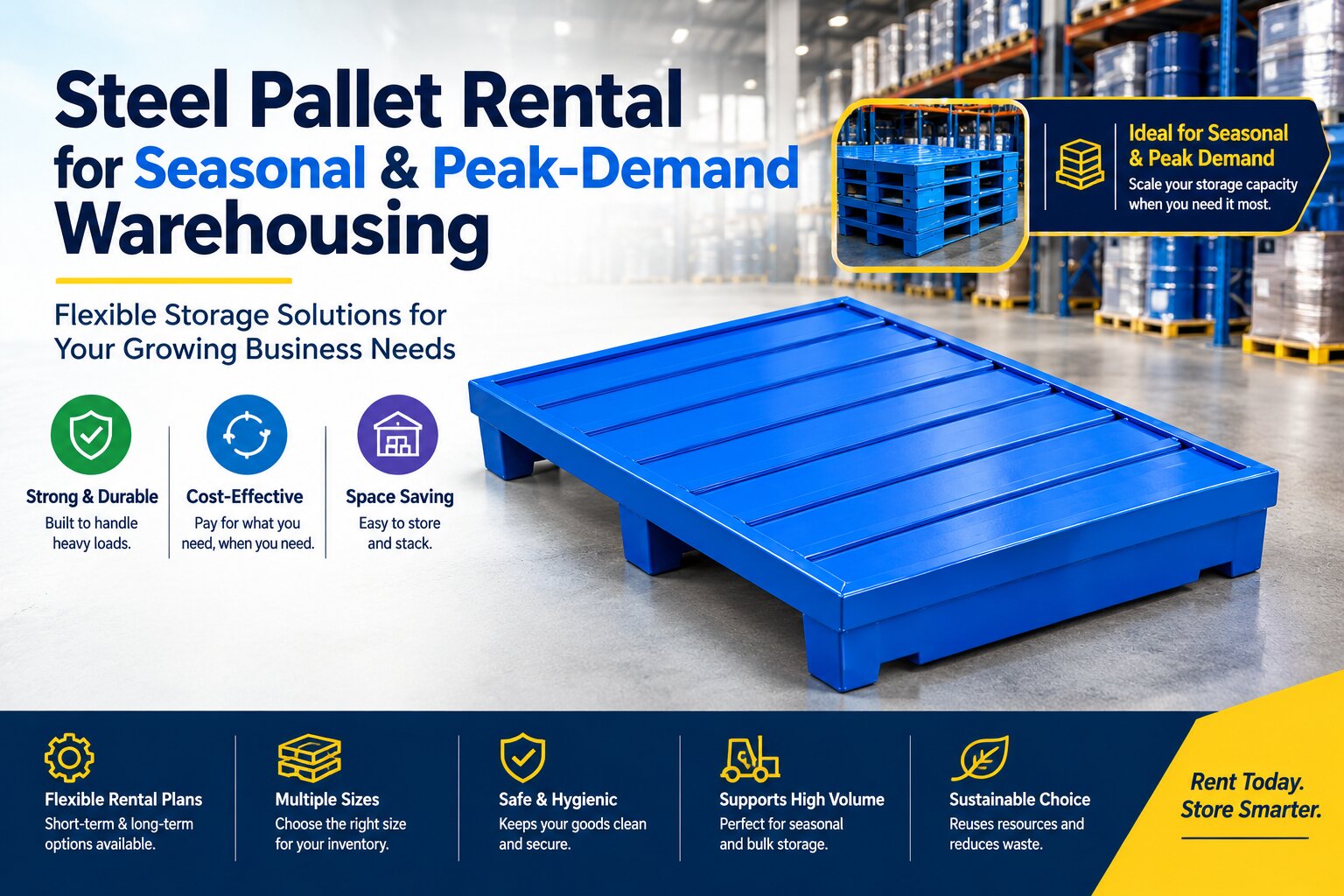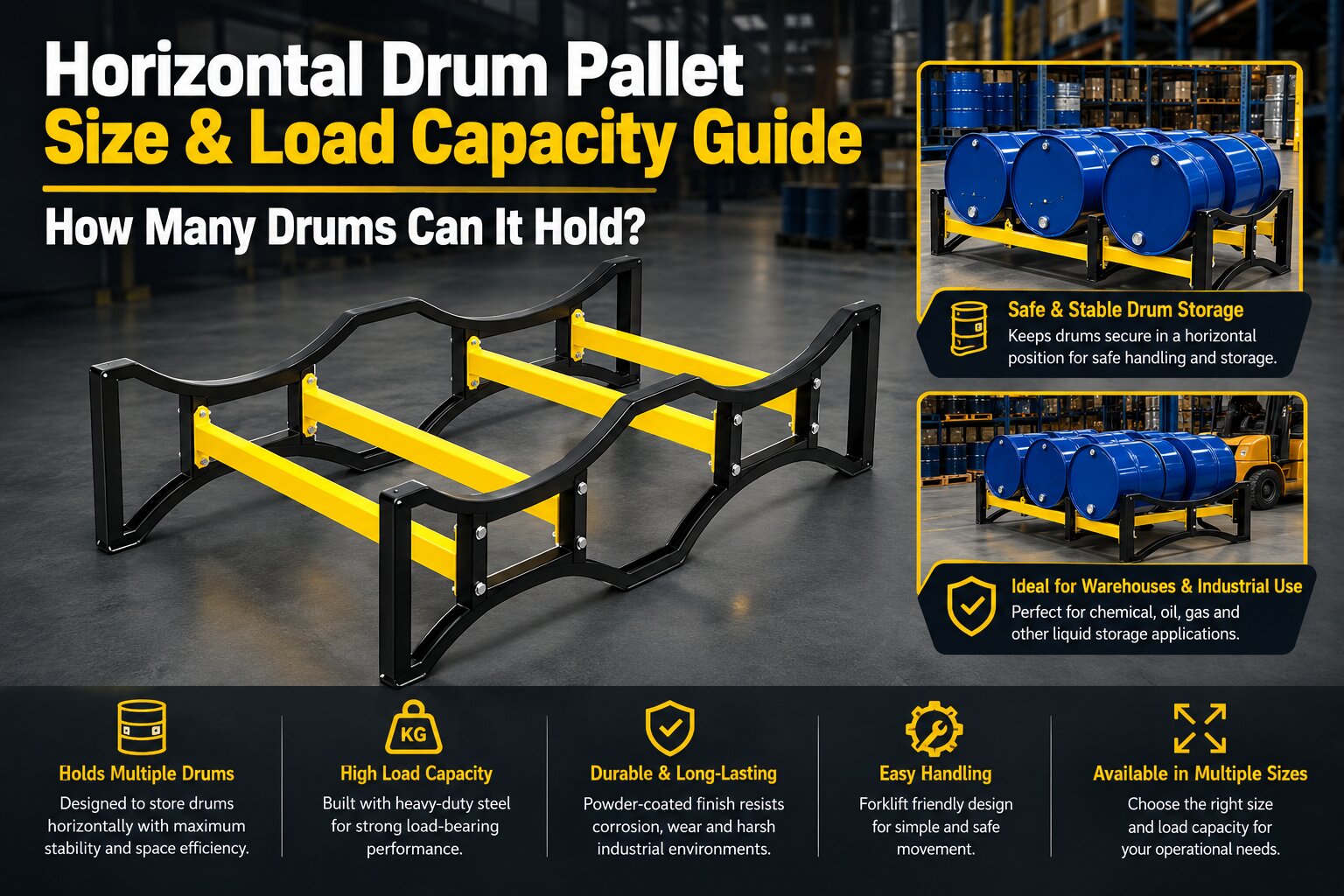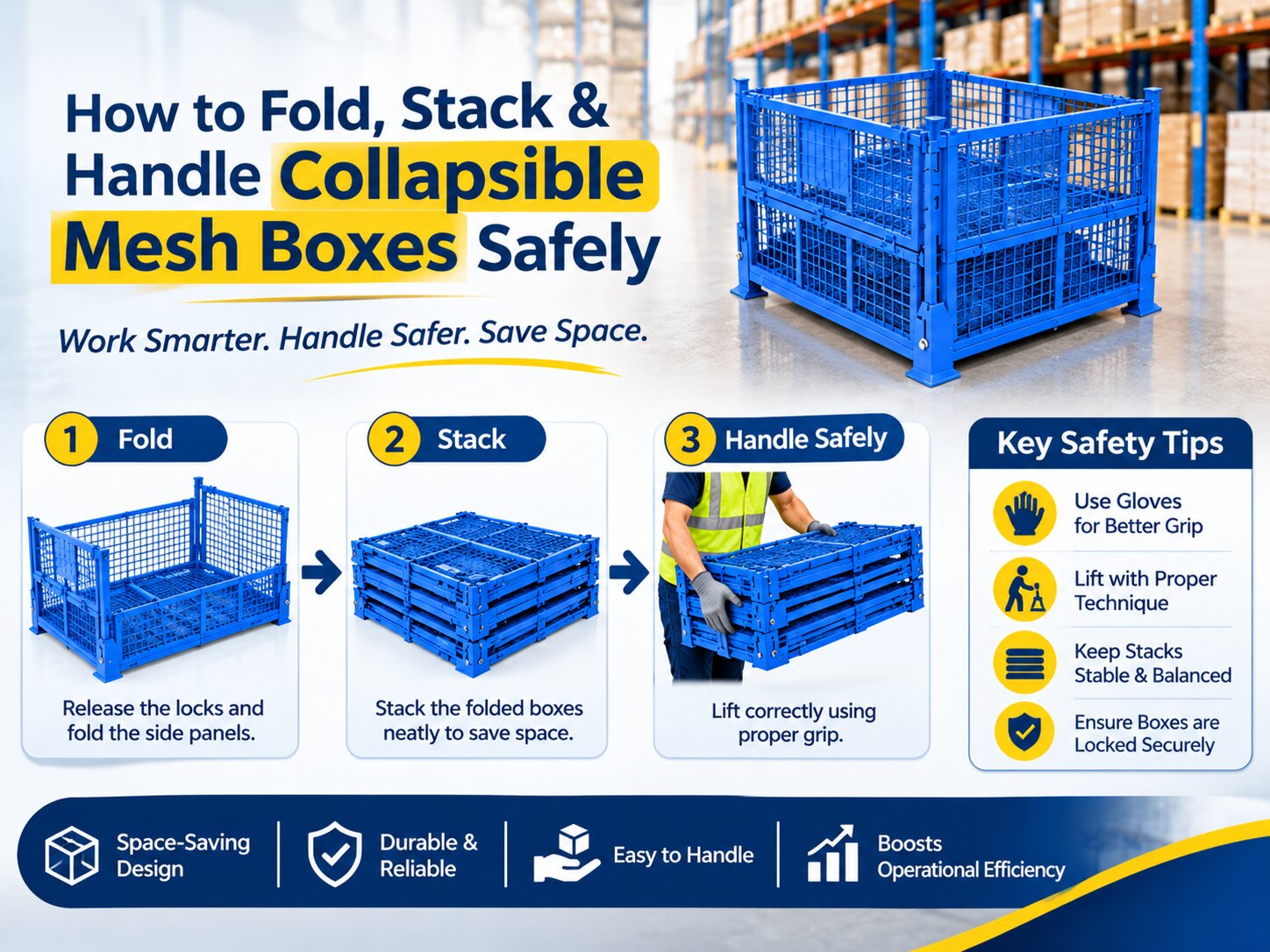
In warehouses, manufacturing facilities and industrial storage areas, proper material handling plays an important role in maintaining workplace safety and improving operational efficiency. Collapsible mesh boxes are widely used for storing, organising and transporting different types of materials because they offer durability, visibility and space-saving convenience.
However, knowing how to fold, stack and handle collapsible mesh boxes safely is just as important as choosing the right storage solution. Incorrect handling, overloading or improper stacking can create unnecessary risks for workers and damage stored materials. Whether you manage a warehouse, manufacturing unit or distribution centre, following the right safety practices can help you make better use of collapsible mesh boxes. In this guide, Stakall explains some practical steps to handle and store these boxes safely.
1. Inspect the Mesh Box Before Use
Before using a collapsible mesh box, always check its overall condition. Regular inspection helps identify potential problems before they affect warehouse operations. Check the following points:
1) Look for bent wires, damaged mesh panels or loose connections.
2) Inspect hinges, locking pins and folding mechanisms.
3) Make sure the base is stable and properly attached.
4) Check for rust, sharp edges or other visible damage.
5) Confirm that the box is suitable for the intended load.
If you notice any structural damage, avoid using the box until it has been properly inspected or repaired.
2. Follow the Correct Folding Process
One of the main advantages of collapsible mesh boxes is that they can be folded when not in use. This helps reduce storage space and makes warehouse organisation easier. Follow these steps for safer folding:
1) Remove all materials from the box before folding it.
2) Place the empty box on a stable and level surface.
3) Release the locking mechanisms carefully.
4) Fold the side panels according to the manufacturer's instructions.
5) Keep your hands away from hinges and moving joints to avoid finger injuries.
6) Make sure the folded structure is properly secured before moving or storing it.
Never force a panel or locking mechanism if it does not move smoothly. Check for obstructions or damage before continuing.
3. Stack Collapsible Mesh Boxes Properly
Proper stacking helps maintain warehouse organisation while making better use of available storage space. However, stacking should always follow the manufacturer's recommended load capacity and stacking guidelines. Here are some important safety practices:
1) Place boxes on a flat, stable and level surface.
2) Ensure that the bottom box can support the combined weight.
3) Align each box properly to maintain balance.
4) Never exceed the recommended stacking height.
5) Avoid placing damaged or unstable boxes at the bottom.
6) Keep stacked boxes away from uneven surfaces and high-traffic walkways.
Proper stacking also helps reduce the possibility of boxes shifting or falling during warehouse operations.
4. Handle and Move Mesh Boxes Carefully
Moving collapsible mesh boxes requires proper handling techniques, especially when they contain heavy materials. For safe handling, follow these recommendations:
1) Check the load capacity before placing materials inside the box.
2) Distribute the weight evenly across the base.
3) Use suitable forklifts or material-handling equipment when required.
4) Ensure that forklift entry points are clear and accessible.
5) Move loads at a controlled speed.
6) Avoid sudden movements, sharp turns and unnecessary impacts.
7) Keep workers away from suspended or unstable loads.
Following these precautions helps protect employees, stored materials and warehouse equipment.
5. Understand the Importance of Load Distribution
Uneven weight distribution can affect the stability of a collapsible mesh box. When heavier materials are placed on one side, the structure may become unbalanced during lifting or transportation. To maintain better stability:
1) Place heavier materials at the bottom.
2) Distribute materials evenly across the available space.
3) Avoid placing excessive weight on individual sections.
4) Secure loose materials wherever necessary.
5) Follow the specified load-bearing capacity.
These practices are useful not only for collapsible mesh boxes but also for other industrial storage solutions, including a corrugated metal box.
6. Store Folded Mesh Boxes in a Designated Area
When collapsible mesh boxes are not being used, folding and storing them correctly can help save valuable warehouse space. Consider these storage practices:
1. Keep folded boxes in a designated storage area.
2. Place them on a clean and level surface.
3. Secure folded units to prevent accidental movement.
4. Avoid storing them near water, chemicals or corrosive materials unless they are designed for such conditions.
5. Keep storage areas free from unnecessary obstacles.
6. Organised storage makes it easier for warehouse teams to locate and reuse boxes whenever required.
7. Train Employees on Safe Handling Practices
Even durable industrial storage equipment requires proper handling. Employees should understand how to operate folding mechanisms, stack boxes, and move loaded units safely. Warehouse managers should provide basic training covering:
1) Correct folding and unfolding procedures.
2) Safe lifting and transportation techniques.
3) Load capacity and stacking limitations.
4) Inspection and maintenance requirements.
5) Workplace safety precautions.
Working with experienced Steel Pallets Manufacturers and industrial storage solution providers can also help businesses understand the importance of selecting suitable material-handling equipment.
Choosing appropriate storage equipment can make a noticeable difference in warehouse operations. Businesses should consider durability, load capacity, handling convenience, storage requirements and long-term usability before selecting a solution. From collapsible mesh boxes to corrugated metal box storage solutions and steel pallets, each product serves different industrial requirements.
Stakall focuses on industrial storage and material-handling solutions that help businesses improve storage organisation and operational efficiency. Selecting the right equipment according to your warehouse requirements can support safer and more organised material handling.
Folding, stacking and handling collapsible mesh boxes safely requires attention to detail and consistent workplace practices. Regular inspections, correct folding techniques, balanced stacking and proper load distribution can help reduce handling risks and improve warehouse efficiency. For businesses looking to optimise industrial storage, choosing suitable equipment and following recommended safety procedures are equally important. With the right storage practices and reliable industrial storage solutions from Stakall, businesses can create a more organised and efficient material-handling environment. Looking for reliable industrial storage solutions? Explore Stakall to find suitable solutions for your warehouse and material-handling requirements.
1. How do you fold collapsible mesh boxes safely
To fold collapsible mesh boxes safely, first remove all materials, place the box on a flat surface, release the locking mechanisms and fold the side panels carefully. Keep your hands away from hinges and moving joints to avoid injuries.
2. What are the benefits of collapsible mesh boxes in warehouses?
Collapsible mesh boxes help save storage space, improve material organisation and make handling easier. They are useful for warehouses, manufacturing facilities and distribution centres.
3. How should collapsible mesh boxes be stacked safely?
Always stack collapsible mesh boxes on a flat and stable surface. Distribute weight evenly, follow the manufacturer's stacking guidelines and never exceed the recommended stacking height or load capacity.
4. What safety precautions should be followed when handling collapsible mesh boxes?
Inspect the box before use, avoid overloading, distribute materials evenly and use suitable material-handling equipment. Workers should also follow proper lifting and transportation procedures.
5. Can collapsible mesh boxes be used for heavy industrial materials?
Yes, certain collapsible mesh boxes are designed for industrial storage and material handling. However, their suitability depends on the product's load capacity, construction and manufacturer's specifications.
6. How do collapsible mesh boxes help save warehouse space?
Their foldable design allows empty boxes to be collapsed and stored compactly. This helps businesses utilise available warehouse space more efficiently.
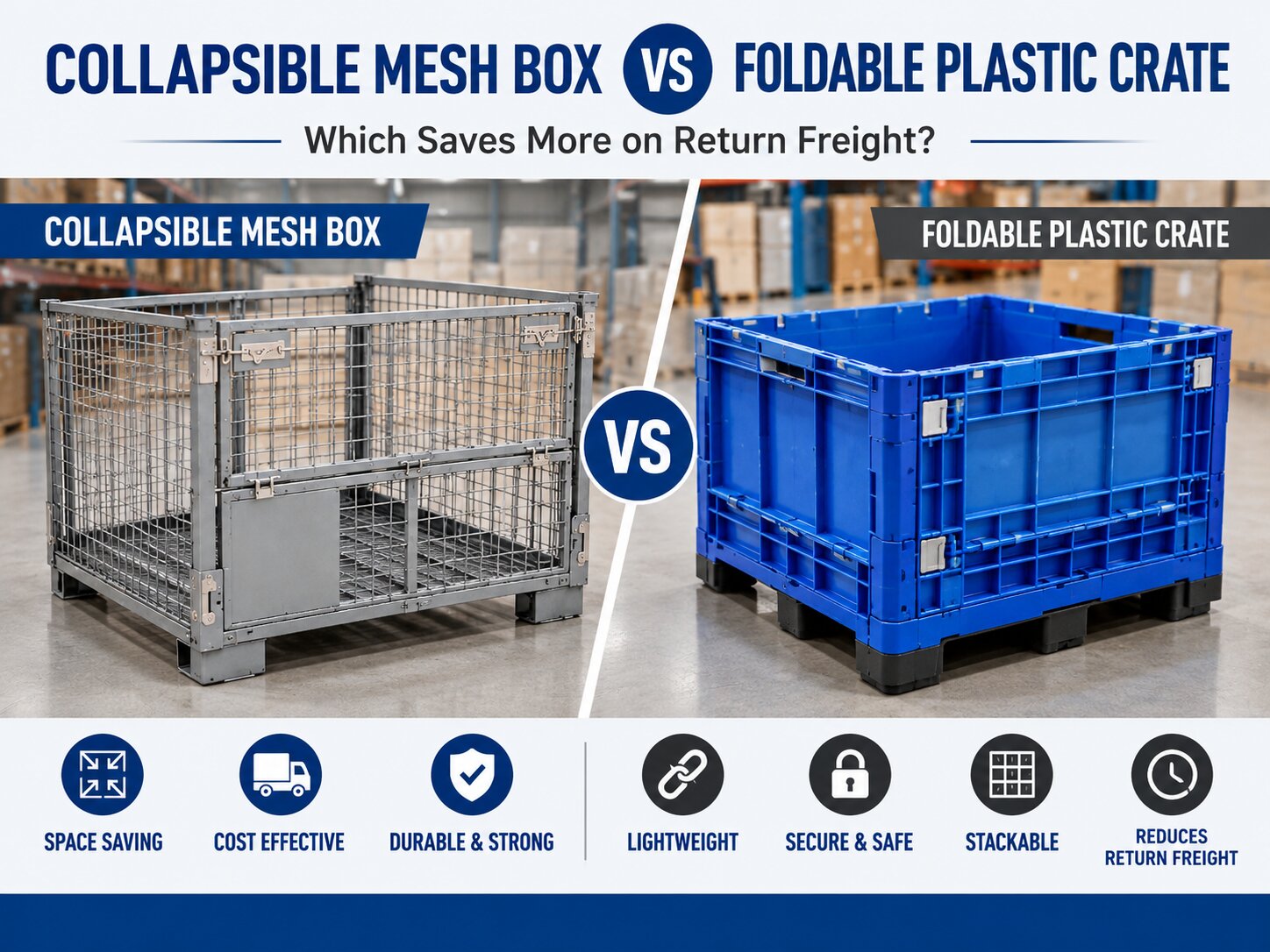
7. What is the difference between a collapsible mesh box and a corrugated metal box?
Collapsible mesh boxes feature an open mesh structure that provides visibility and ventilation, while a corrugated metal box generally has solid metal panels. The right option depends on the materials being stored and the specific handling requirements.