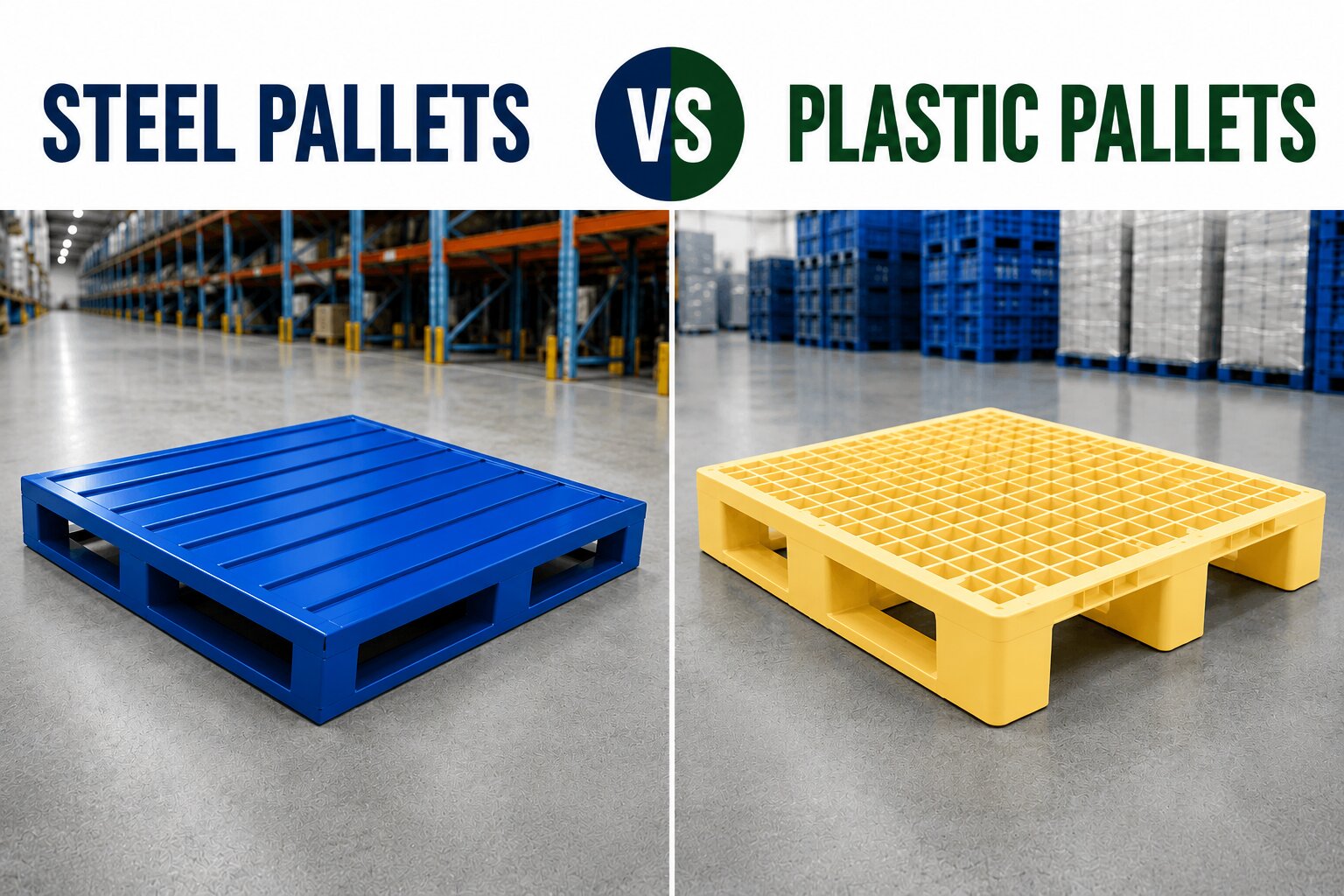
In modern warehousing, logistics, and manufacturing industries, choosing the right pallet system directly impacts efficiency, safety, and long-term operational costs. The debate between Steel Pallets vs Plastic Pallets is becoming increasingly relevant as businesses focus on durability, sustainability, and return on investment (ROI). While both options have their advantages, the ideal choice depends on your operational requirements. In this blog, we compare steel and plastic pallets in detail to help you determine which solution delivers better value for your business.
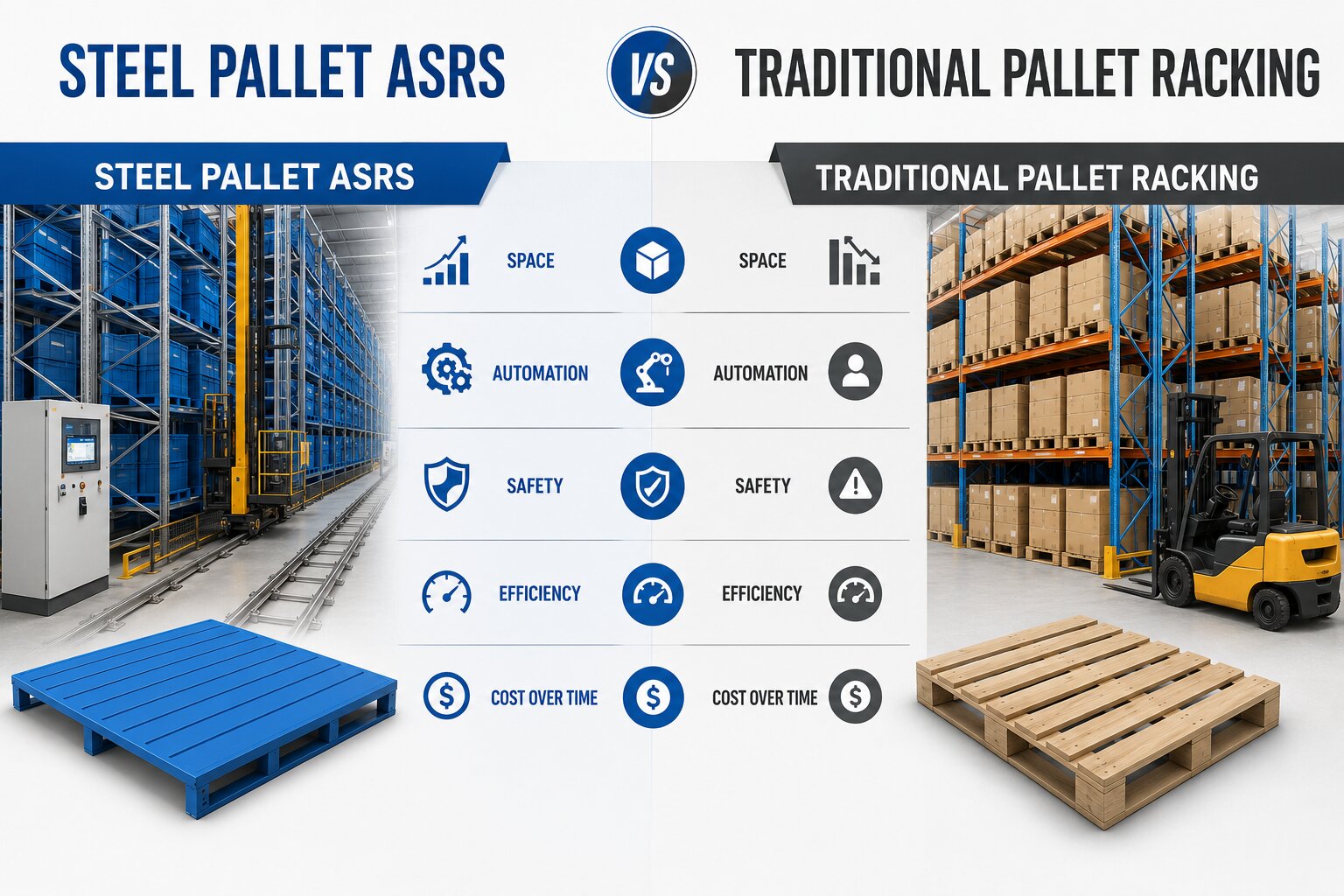
For automated warehouse environments, an ASRS steel pallet provides enhanced strength, dimensional accuracy, and seamless compatibility with Automated Storage and Retrieval Systems (ASRS), making it a preferred choice for high-density storage applications. Leading Steel Pallets Manufacturers such as Stakall offer advanced steel pallet solutions designed for demanding industrial applications.
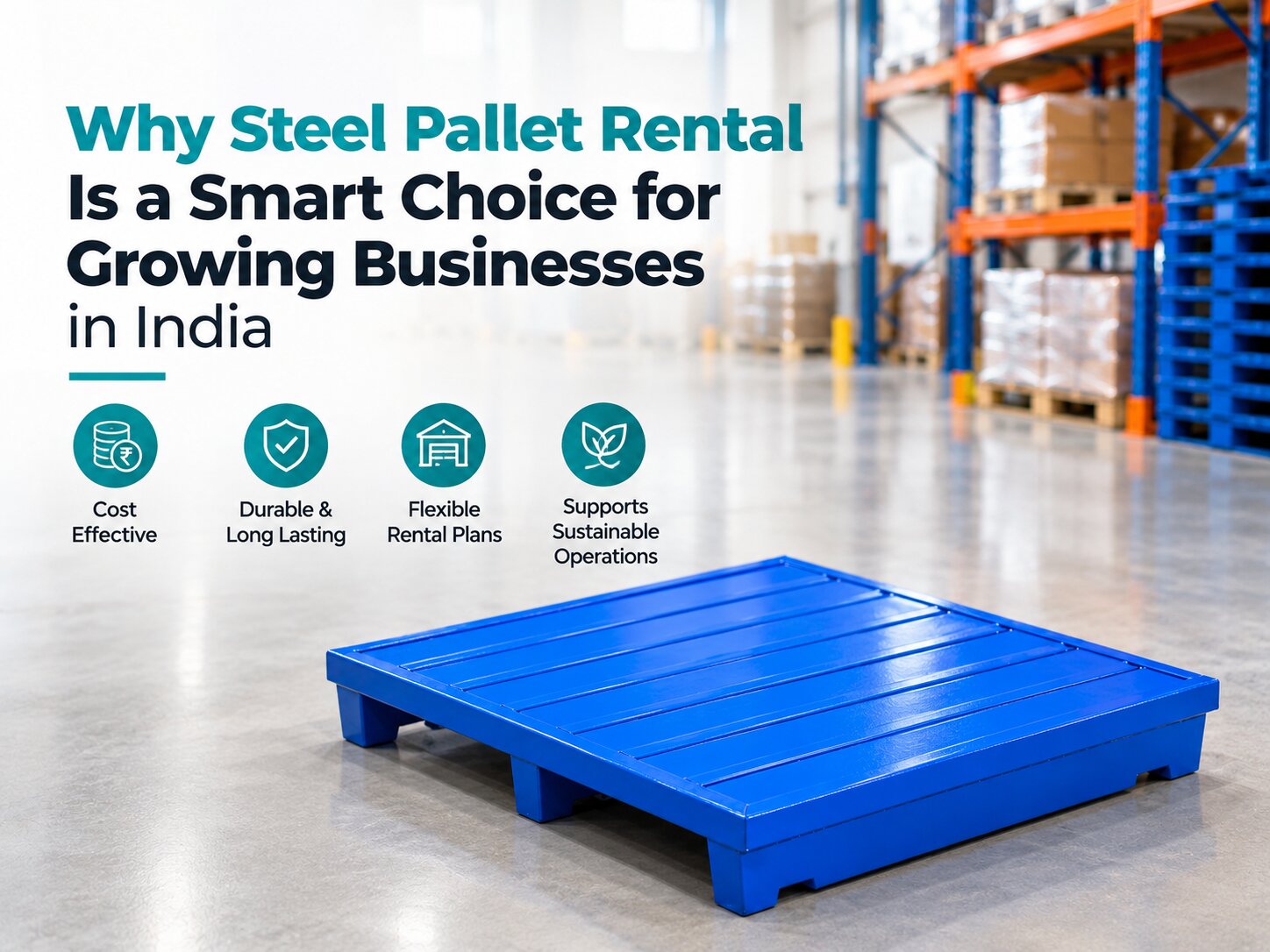
Steel pallets are heavy-duty storage and transportation platforms manufactured from high-grade steel. They are designed to handle high loads, withstand harsh industrial environments, and provide a long service life. Known for their exceptional strength and reliability, durable steel pallets are ideal for demanding warehouse and logistics operations where consistent performance is essential. Trusted metal pallet manufacturers produce engineered steel pallets that are widely used in automotive, FMCG, logistics, warehousing, export, and manufacturing industries where strength and durability are critical.
Plastic pallets are lightweight storage platforms typically made from High-Density Polyethylene (HDPE) or other industrial-grade polymers. They are commonly used in industries where hygiene, moisture resistance, and lightweight handling are important. Although plastic pallets perform well in certain environments, they may not be suitable for heavy industrial loads or long-term use in demanding operating conditions.
1. Durability & Strength
|
Feature |
Steel Pallets |
Plastic Pallets |
|
Load Capacity |
Extremely High |
Moderate |
|
Lifespan |
10–20+ Years |
3–7 Years |
|
Impact Resistance |
Very High |
Medium |
|
Fire Resistance |
Excellent |
Can Melt or Deform |
|
Repairability |
Easily Repairable |
Often Requires Replacement |
|
Suitability |
Heavy Industries |
Light to Medium Applications |
Steel pallets are built for long-term industrial use and can withstand rough handling, heavy loads, and challenging environmental conditions. Plastic pallets are more susceptible to cracking, deformation, and wear over time.
2. Cost & ROI (Return on Investment)
|
Feature |
Steel Pallets |
Plastic Pallets |
|
Initial Cost |
Higher |
Lower |
|
Maintenance Cost |
Very Low |
Medium |
|
Replacement Frequency |
Rare |
More Frequent |
|
Total Cost of Ownership |
Low Over Time |
Higher Over Time |
|
Long-Term ROI |
High |
Low to Medium |
Although steel pallets require a higher initial investment, their extended lifespan and lower replacement costs often result in a significantly better long-term return on investment.
3. Load-Bearing Capacity
|
Feature |
Steel Pallets |
Plastic Pallets |
|
Heavy Load Handling |
Excellent |
Limited |
|
Industrial Usage |
Ideal |
Restricted |
|
Rack Storage Performance |
Excellent |
Moderate |
|
Stability |
High |
Moderate |
Steel pallets are ideal for warehouses using racking systems and automated storage solutions, where strength and stability are essential.
4. Hygiene & Maintenance
|
Feature |
Steel Pallets |
Plastic Pallets |
|
Cleanability |
Easy |
Easy |
|
Chemical Resistance |
High |
High |
|
Contamination Risk |
Very Low |
Low |
|
Pest Resistance |
Excellent |
Excellent |
Both pallet types offer hygienic storage solutions and are easy to clean, making them suitable for controlled industrial environments.
5. Sustainability & Environmental Impact
|
Feature |
Steel Pallets |
Plastic Pallets |
|
Recyclability |
100% Recyclable |
Limited Recycling |
|
Waste Generation |
Low |
Medium |
|
Environmental Impact |
Low |
Moderate |
Steel pallets contribute to a circular economy because they can be fully recycled at the end of their service life, reducing environmental waste.
Stakall is among the trusted Steel Pallet Manufacturers delivering engineered solutions for modern warehousing and logistics operations.
Key Benefits:
1) Heavy-duty load capacity
2) Long service life
3) Low maintenance requirements
4) Space optimization design
5) Industrial-grade safety standards
6) Corrosion-resistant finishes
7)Custom manufacturing options
8) Suitable for export and warehouse racking systems
Stakall steel pallet solutions are widely used in warehouses, automotive plants, FMCG distribution centers, manufacturing facilities, and export hubs.
|
Feature |
Steel Pallets |
Plastic Pallets |
|
Material Type |
High-Strength Steel/Metal |
HDPE / Plastic Polymers |
|
Durability |
Extremely High (10–20+ Years) |
Medium (3–7 Years) |
|
Load Capacity |
Very High (Heavy-Duty Use) |
Moderate to Low |
|
Impact Resistance |
Excellent |
Limited |
|
Cost (Initial) |
High |
Low |
|
Long-Term ROI |
Very High |
Medium to Low |
|
Maintenance |
Very Low |
Medium |
|
Hygiene Level |
High |
High |
|
Weather Resistance |
Excellent (With Protective Coating) |
Good |
|
Fire Resistance |
High |
Low |
|
Recyclability |
100% Recyclable |
Limited Recycling Options |
|
Best Use Case |
Heavy Industries, Logistics, Export |
Food, Pharma, Light Warehousing |
|
Lifespan Value |
Long-Term Investment |
Short to Mid-Term Use
|
Both pallet types serve different industrial requirements. Plastic pallets are suitable for industries that prioritize lightweight handling and hygiene. However, when durability, load-bearing capacity, longevity, and overall return on investment are the primary considerations, steel pallets offer a clear advantage.
For businesses seeking long-term operational efficiency, reduced replacement costs, and superior performance in demanding environments, steel pallets are often the more cost-effective solution.
The comparison between Steel Pallets vs Plastic Pallets demonstrates that steel pallets provide superior strength, durability, load capacity, and long-term value. While plastic pallets remain a practical choice for specific lightweight applications, industries that require reliable heavy-duty performance often benefit more from steel pallet systems. With advanced engineering, robust construction, and extended service life, steel pallets represent a smart investment for businesses looking to improve warehouse efficiency, safety, and operational profitability.Partnering with an experienced Steel Pallet Manufacturer ensures access to high-quality pallet solutions that meet the demanding requirements of modern warehousing, logistics, and automated storage systems.
1. Which is better: Steel Pallets vs Plastic Pallets?
Steel pallets are generally better for heavy-duty applications, long-term durability, and higher ROI, while plastic pallets are more suitable for light-duty and hygiene-focused operations.
2. Are steel pallets expensive?
Steel pallets typically have a higher initial purchase cost. However, their longer lifespan and lower replacement frequency often make them more economical over time.
3. What industries use steel pallets?
Industries such as automotive, logistics, manufacturing, FMCG, warehousing, and export operations commonly use steel pallets.
4. Do steel pallets rust?
High-quality steel pallets are usually treated with protective coatings or galvanized finishes to prevent rust and corrosion.
5. Why choose Stakall for steel pallets?
Stakall offers durable, custom-engineered steel pallet solutions designed to meet the demanding requirements of modern industrial and warehouse operations.