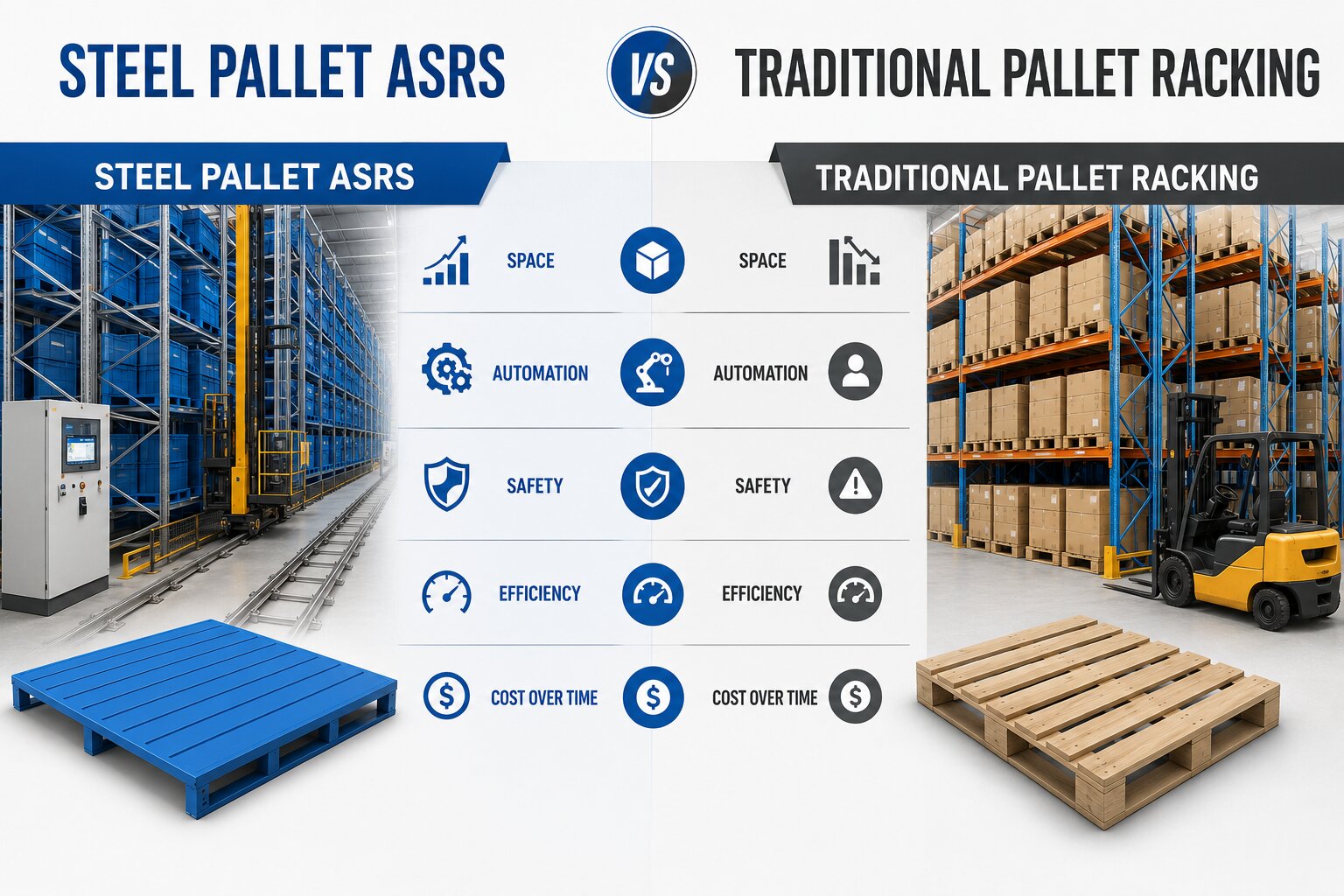
Efficient warehouse storage is the foundation of safe, productive, and cost-effective industrial operations. Whether your facility stores lubricants, chemicals, paints, pharmaceuticals, food-grade liquids, or petroleum products, choosing the right drum storage method directly impacts space utilisation, worker safety, inventory management, and operational efficiency.
One of the most common questions warehouse managers ask is:
The answer depends on how frequently the drums are accessed, the available warehouse space, and your material handling process. In this guide, we'll compare Horizontal Drum Pallets vs Vertical Drum Storage, covering their advantages, limitations, space utilisation, safety considerations, and the industries where each solution performs best.
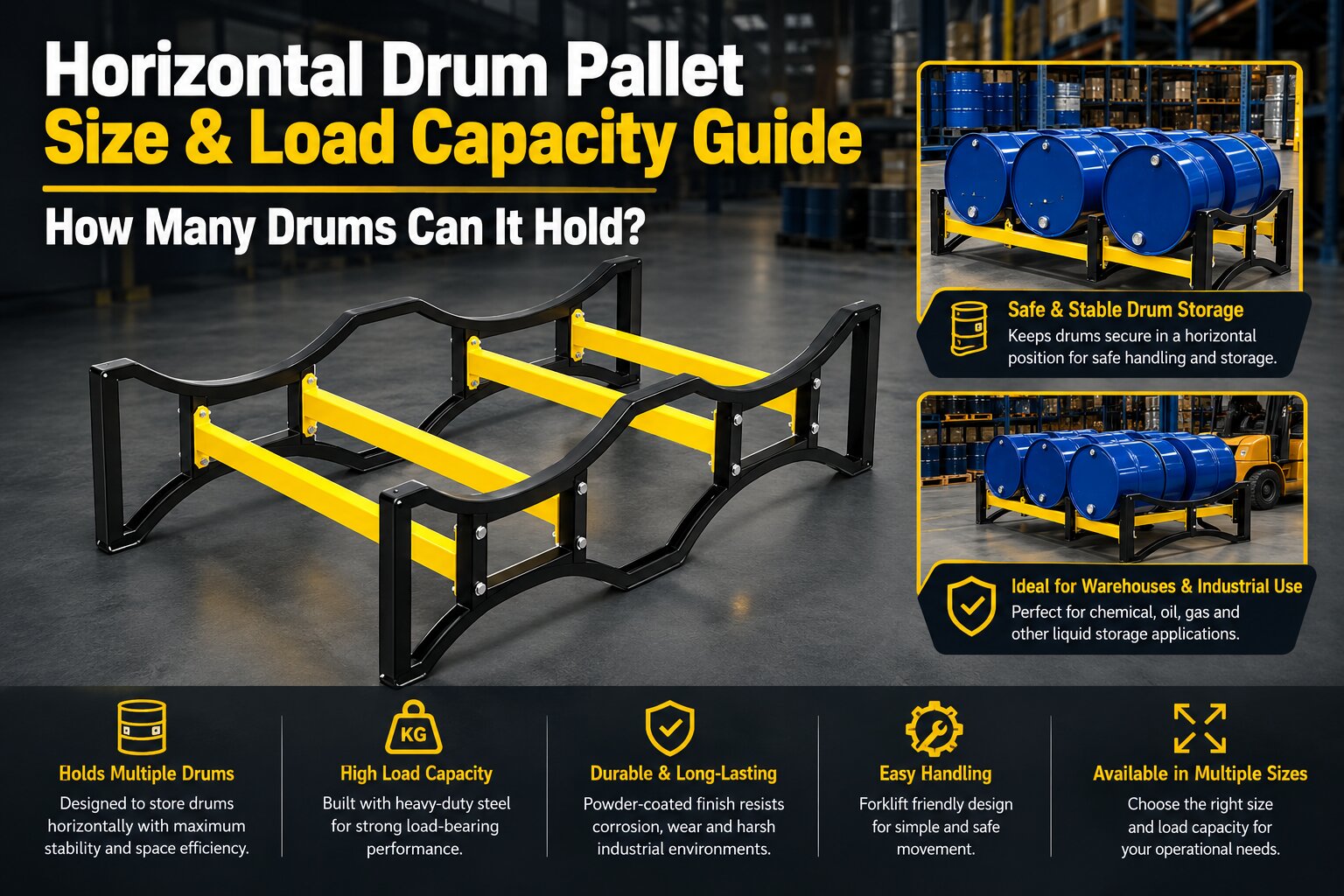
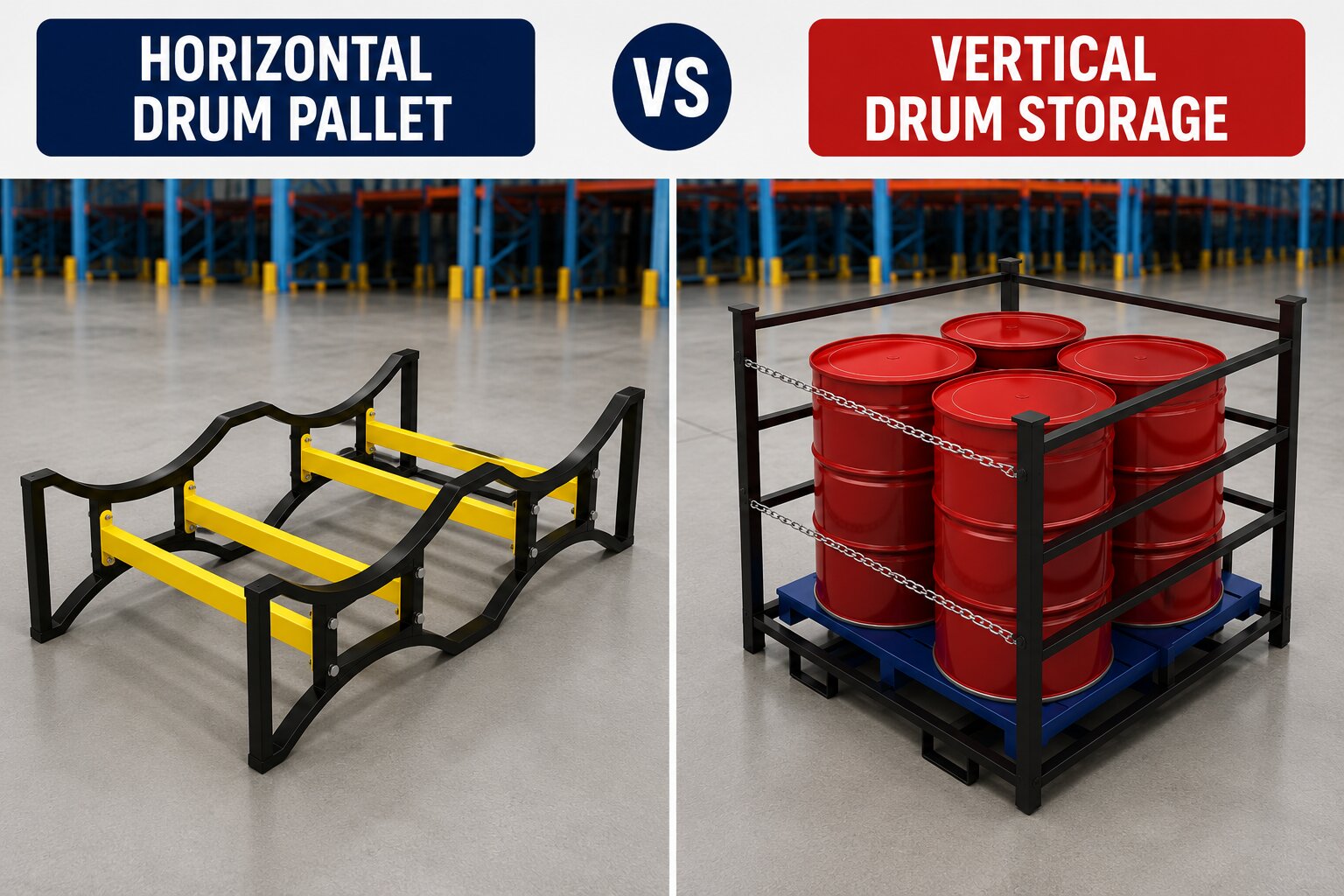
A Horizontal Drum Pallet is engineered to securely hold steel or plastic drums in a horizontal (lying) position. The drum rests on specially designed cradles that prevent rolling while allowing direct access to the drum opening for safe and efficient liquid dispensing. This storage method eliminates the need to repeatedly lift, tilt, or reposition heavy drums during production.
1) Chemical manufacturing
2) Petroleum and oil industries
3) Paint and coating manufacturers
4) Pharmaceutical plants
5) Food processing industries
6) Lubricant storage facilities
7) Industrial manufacturing units
Because the drum remains in the dispensing position throughout use, operations become faster, safer, and more organised.
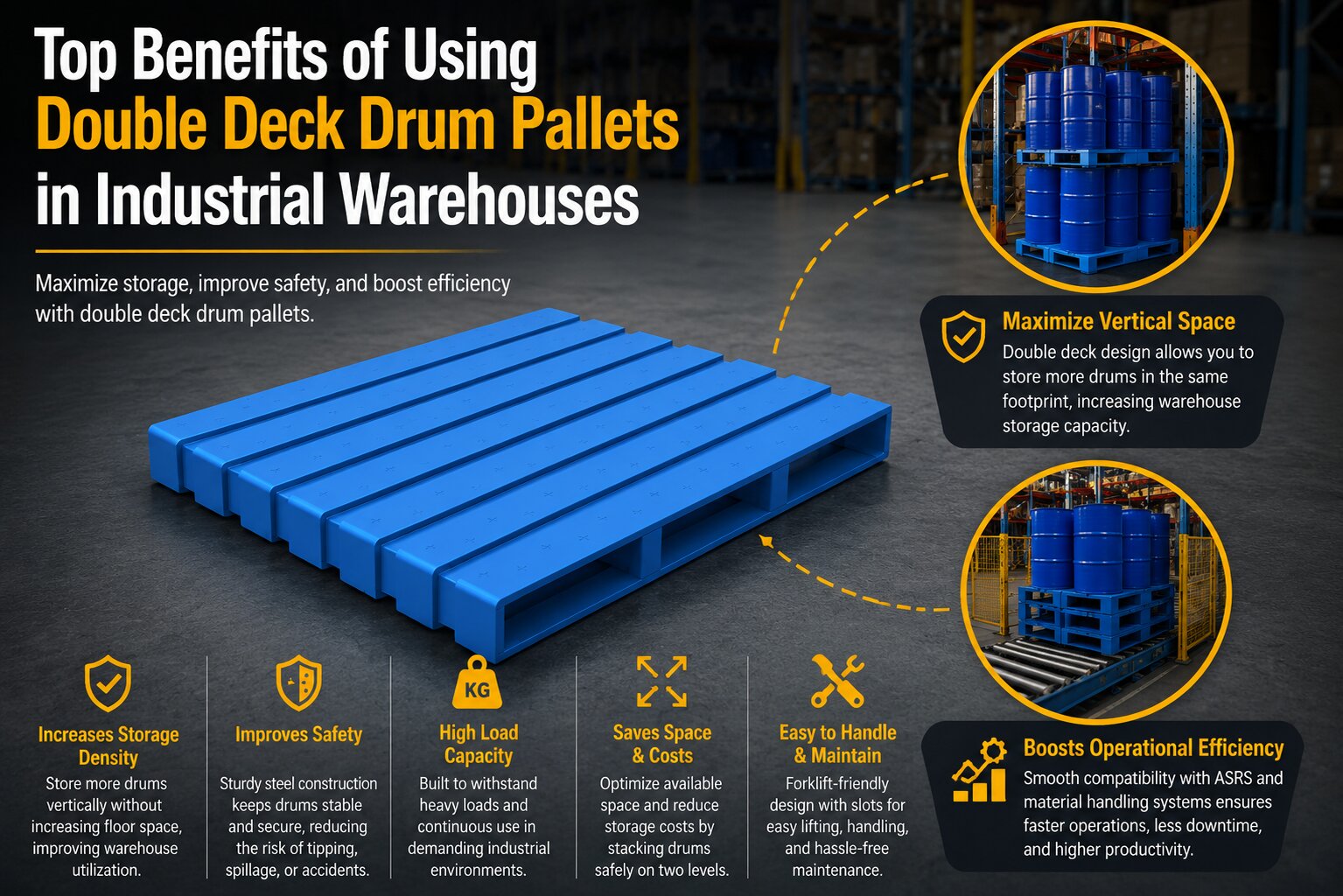
Vertical Drum Storage keeps drums standing upright on their base. It is the most common method used for storing unopened or sealed drums in warehouses. Since the contents remain sealed until required, this storage style is particularly suitable for facilities that prioritise high-volume inventory storage over frequent dispensing. Many warehouses also use a Drum Rack System alongside vertical drum storage to improve organisation, maximise floor space, and ensure safe handling of drums during storage and retrieval.
Common Applications
1) Bulk warehouse storage
2) Distribution centres
3) Export inventory
4) Finished goods storage
5) Manufacturing plants
6) Long-term stock holding
7)Warehouses using a Drum Rack System for organised and efficient drum storage
Horizontal Drum Pallet vs Vertical Drum Storage: Quick Comparison
|
Feature |
Horizontal Drum Pallet |
Vertical Drum Storage |
|
Drum Position |
Horizontal |
Upright |
|
Space Efficiency |
Excellent for operational workflows |
Excellent for bulk inventory |
|
Liquid Dispensing |
Immediate and convenient |
Requires tilting or lifting |
|
Worker Safety |
High |
Moderate |
|
Accessibility |
Excellent |
Limited |
|
Spill Prevention |
Better control |
Depends on handling method |
|
Labour Requirement |
Lower |
Higher |
|
Best Application |
Frequently used drums |
Long-term storage |
Space Utilisation: Which Storage Method Performs Better?
Warehouse space isn't just about fitting more drums into a building; it's about using that space efficiently while maintaining productivity.
Horizontal Drum Pallets
Although horizontal pallets require slightly more width, they significantly improve usable operational space.
1) Faster liquid dispensing
2) Dedicated dispensing stations
3) Reduced forklift traffic
4) Better workflow organisation
5) No need for drum tilters
6) Improved operator accessibility
In production environments where drums are opened daily, horizontal storage saves valuable time and reduces unnecessary movement.
Vertical storage maximises storage density and is ideal when drums remain unopened.
1) Higher stacking capacity
2) Efficient bulk inventory storage
3) Lower initial storage investment
4) Easy transportation of sealed drums
5) Suitable for export and warehouse stock
However, once a drum needs to be dispensed, additional handling equipment is usually required, increasing labour and operating time.
Proper drum storage is essential for protecting workers, preventing spills, and maintaining regulatory compliance.
Benefits of Horizontal Drum Pallets
1) Prevent drums from rolling
2) Reduce manual lifting
3) Improve ergonomic handling
4) Lower spill risk
5) Stable drum positioning
6) Faster emergency access
These features make horizontal drum pallets particularly suitable for hazardous chemicals and high-value liquids.
Challenges with Vertical Storage
While vertical storage is effective for sealed inventory, operational handling can introduce risks such as:
1) Drum tipping during movement
2) Increased manual handling
3) Higher chance of spills
3) Difficult dispensing process
4) Greater dependence on forklifts and drum lifters
Facilities handling hazardous materials should ensure that proper handling procedures and suitable equipment are in place.
The right storage method should not slow down daily warehouse operations.
Horizontal Drum Pallets Improve Productivity By:
1) Providing immediate access to drum contents
2) Reducing forklift movements
3) Eliminating repeated drum repositioning
4) Speeding up production processes
5) Improving warehouse organisation
6) Lowering operator fatigue
Vertical Drum Storage Works Best For:
1) Bulk inventory management
2) Sealed product storage
3) Low-frequency access
4) Export stock
5) Long-term warehousing
Horizontal Drum Pallets
Horizontal drum storage is ideal for industries where liquids are dispensed regularly.
Typical users include:
1) Chemical manufacturers
2) Oil and gas companies
3) Lubricant producers
4) Paint manufacturers
5) Pharmaceutical companies
6) Food and beverage processing plants
Vertical Drum Storage
Vertical storage is better suited for operations focused on inventory rather than dispensing.
Common applications include:
1) Distribution centres
2) Export warehouses
3) Manufacturing inventory
4) Bulk storage facilities
5) Finished goods warehouses
Although vertical storage generally has a lower initial cost, operational expenses can be higher over time due to additional labour and equipment requirements.
|
Cost Factor |
Horizontal Drum Pallet |
Vertical Drum Storage |
|
Initial Investment |
Moderate |
Lower |
|
Labour Cost |
Lower |
Higher |
|
Liquid Dispensing Equipment |
Not Required |
Usually Required |
|
Operating Efficiency |
High |
Moderate |
|
Maintenance |
Low |
Medium |
|
Long-Term Operating Cost |
Lower |
Higher |
For businesses with frequent drum usage, the productivity gains from horizontal drum pallets often outweigh the higher upfront investment.
Modern manufacturing facilities increasingly prefer horizontal drum pallets because they:
1) Improve warehouse efficiency
2) Enhance worker safety
3) Reduce handling time
4) Increase productivity
5) Minimise spill risks
6) Simplify liquid dispensing
7) Support lean warehouse operations
As industries continue to automate material handling processes, horizontal storage systems have become an important component of efficient warehouse design.
Stakall manufactures heavy-duty industrial storage solutions designed for demanding warehouse environments.
1) Heavy-duty steel construction
2) High load-bearing capacity
3) Powder-coated corrosion-resistant finish
4) Safe drum locking system
5) Custom dimensions available
6) Long service life
7) Low maintenance
8) Suitable for automated warehouse systems
9) Designed for industrial applications
In addition to Horizontal Drum Pallets, Stakall offers:
1) Steel Pallets
2) Metal Post Pallets
3) Stackable Storage Systems
4) Warehouse Racking Solutions
5) ASRS-Compatible Storage Products
6) Custom Industrial Material Handling Solutions
Choose horizontal storage if you:
1) Dispense liquids regularly
2) Prioritise worker safety
3) Want faster production workflows
4) Need better accessibility
5) Aim to reduce manual handling
6) Want to minimise spills and downtime
Vertical storage is ideal if you:
|
Criteria |
Better Choice |
|
Operational Space Utilisation |
Horizontal Drum Pallet |
|
Bulk Storage Capacity |
Vertical Storage |
|
Worker Safety |
Horizontal Drum Pallet |
|
Liquid Dispensing |
Horizontal Drum Pallet |
|
Accessibility |
Horizontal Drum Pallet |
|
Labour Efficiency |
Horizontal Drum Pallet |
|
Long-Term Inventory |
Vertical Storage |
|
Productivity |
Horizontal Drum Pallet |
|
Warehouse Workflow |
Horizontal Drum Pallet |
|
Overall Industrial Operations |
Horizontal Drum Pallet |
Both horizontal and vertical drum storage methods have their place in industrial warehouses. Vertical Drum Storage is the preferred choice for storing large quantities of sealed drums where maximum storage density is the primary objective.
However, when daily operations require frequent dispensing, quick accessibility, improved safety, and greater productivity, Horizontal Drum Pallets provide a clear operational advantage. They reduce manual handling, minimise spill risks, improve workflow efficiency, and support safer working environments.
For industries such as chemicals, pharmaceuticals, lubricants, paints, petroleum, and food processing, investing in a high-quality Horizontal Drum Pallet can significantly improve warehouse performance while reducing long-term operating costs.
As a trusted Steel Pallet Manufacturer, Stakall delivers robust, custom-engineered industrial storage solutions, including Steel Pallets, Metal Post Pallets, and Horizontal Drum Pallets designed to maximise warehouse efficiency, enhance workplace safety, and support modern material handling operations. Whether you need durable pallet systems or customised warehouse storage solutions, Stakall provides reliable products tailored to your operational requirements.
1. What is the main difference between horizontal and vertical drum storage?
Horizontal storage keeps drums lying down for easy dispensing, while vertical storage keeps drums upright for bulk inventory and long-term storage.
2. Which storage method saves more warehouse space?
For high-density inventory storage, vertical storage is more space-efficient. For day-to-day operations and dispensing, horizontal drum pallets provide better functional space utilisation and workflow efficiency.
3. Are horizontal drum pallets safer?
Yes. Horizontal drum pallets improve stability, reduce manual handling, minimise spill risks, and provide better ergonomic access for workers.
4. Which industries commonly use horizontal drum pallets?
Chemical processing, oil and gas, lubricants, pharmaceuticals, paints, food processing, and manufacturing industries widely use horizontal drum pallets.
5. Do horizontal drum pallets reduce operating costs?
Yes. They improve accessibility, reduce labour, eliminate the need for drum tilting equipment, minimise product spills, and increase overall warehouse productivity.
6. Why choose Stakall for drum storage solutions?
Stakall manufactures premium-quality industrial storage systems with heavy-duty construction, corrosion-resistant finishes, customisable designs, and high load-bearing capacity, helping businesses create safer and more efficient warehouse operations.