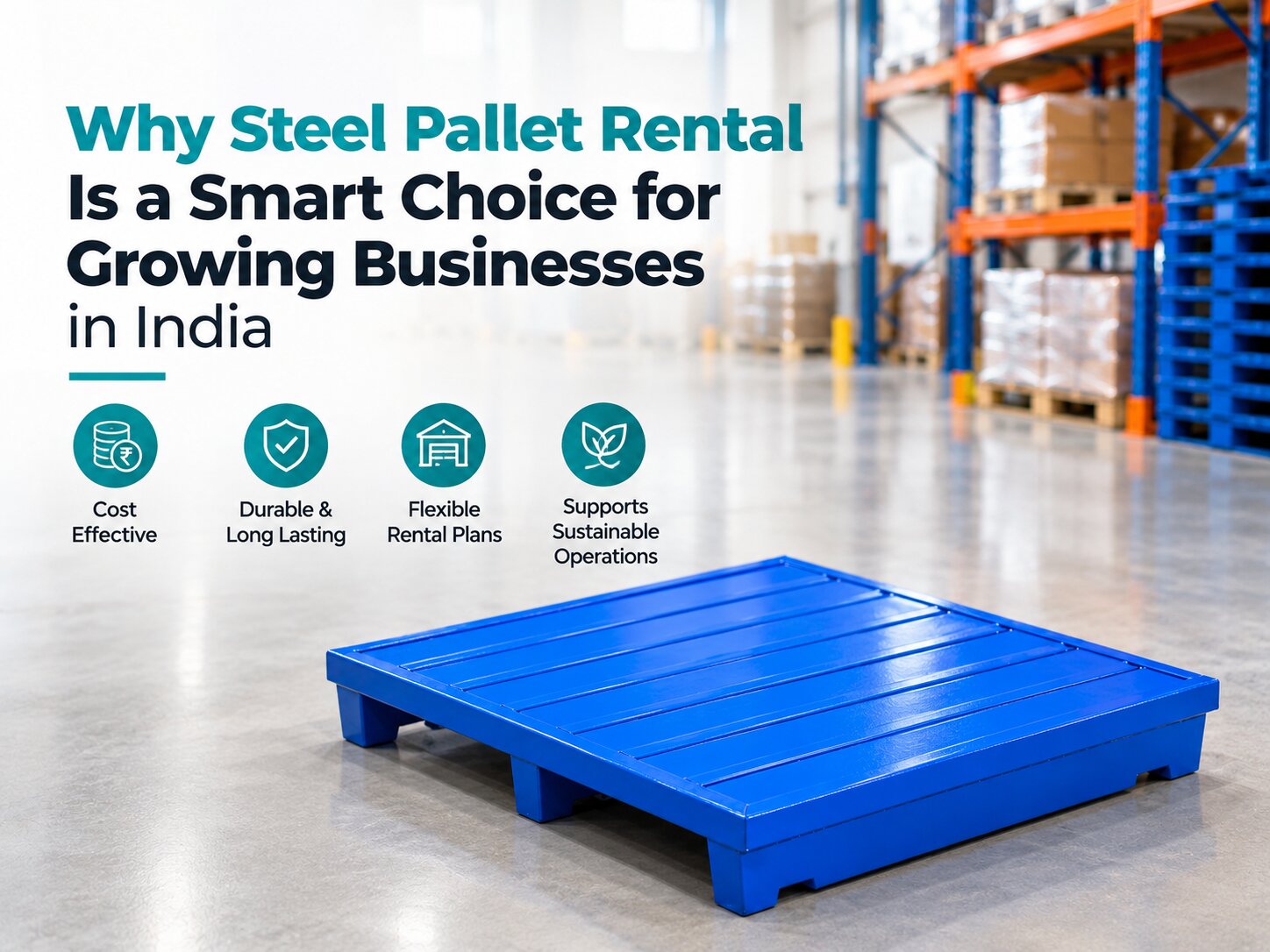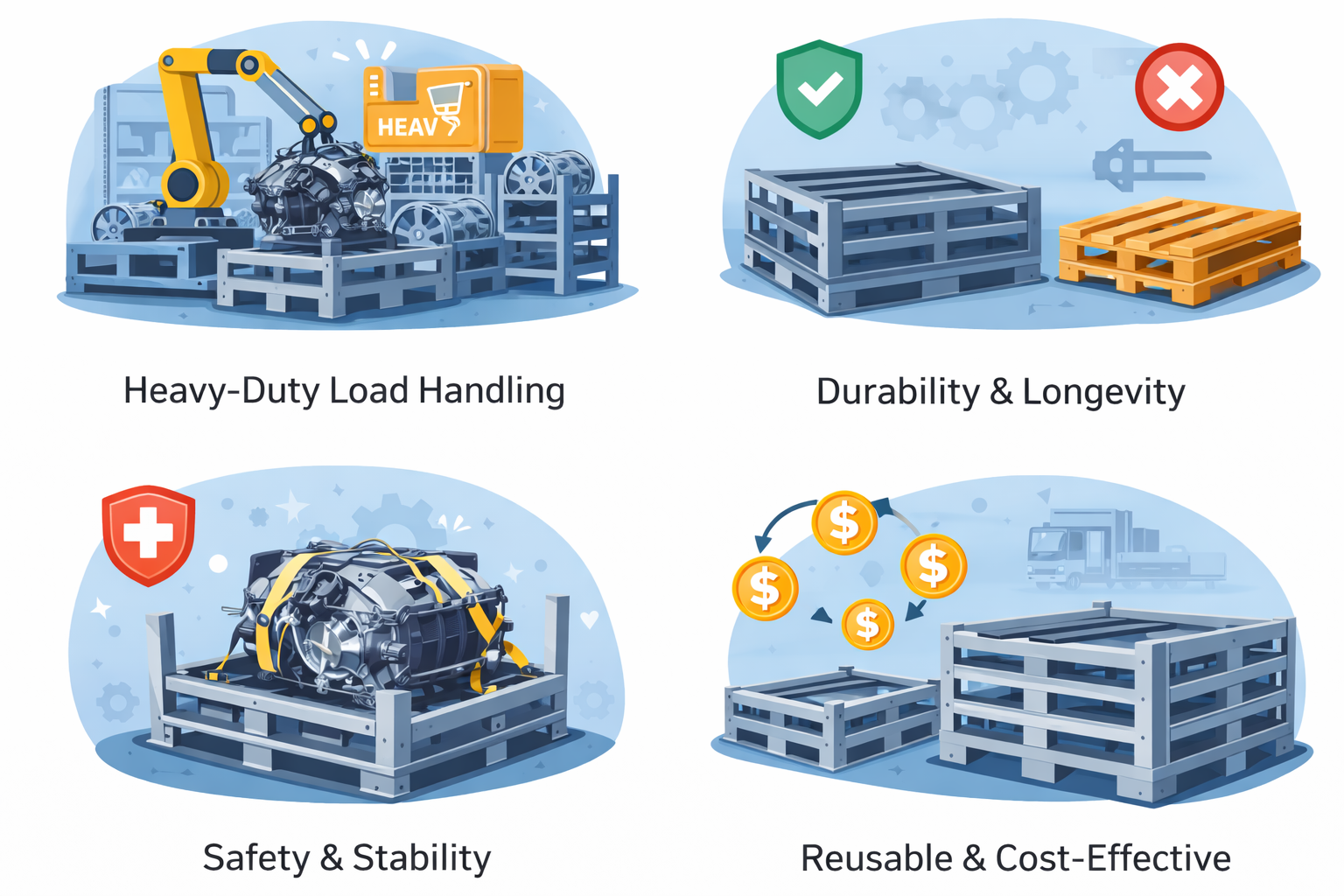
The automotive industry handles heavy, high-value, and precision components from engines and transmissions to stamped body parts and assemblies. To move and store these safely and efficiently, manufacturers increasingly rely on steel pallets over wood or plastic. Among the various material handling options available, steel pallet systems have emerged as the preferred choice. In this article, we will explore why steel pallet systems are so widely used in the automotive sector, their benefits, and how they can improve operational efficiency.
1. Exceptional Load Capacity & StrengthResult: Zero pallet failures reduced product damage.
Result: Lower replacement frequency and better ROI over time.
3. Consistency for Automation & RoboticsResult: Smooth automated flow and fewer line stoppages.
Result: Safer handling for operators and equipment.
5. Better Space Utilization & Stackability
Result: Higher storage density and cleaner layouts.
6.Environmentally Sustainable Choice
Result: Supports sustainability goals and ESG commitments.
7. Custom Designs for Automotive Applications
Wheels, runners, or rack-compatible bases.
Result: Secure part positioning and damage prevention.
|
Benefit |
Description |
|
Durability and Strength |
Steel pallets can withstand heavy loads and extreme conditions, ensuring longevity and reliability. |
|
Long-Term Cost Efficiency |
Though initially more expensive, steel pallets save money over time by reducing replacement costs. |
|
Space Efficiency |
Steel pallets are stackable, helping businesses maximize storage space and reduce storage costs. |
|
Improved Safety and Stability |
Their sturdy build ensures automotive parts are safely stored and transported without damage. |
|
Environmentally Friendly |
Steel is 100% recyclable, making it a sustainable choice for businesses focusing on eco-friendly practices. |
|
Optimized Supply Chain |
Steel pallets help streamline the supply chain by offering standardization and reducing downtime. |
|
Customization |
Steel pallets can be tailored to fit specific automotive components for better storage and handling. |
Comparison: Steel vs Other Pallets (Automotive Use)
|
Feature |
Steel Pallets |
Wooden Pallets |
Plastic Pallets |
|
Load Capacity |
⭐⭐⭐⭐⭐ | ⭐⭐ | ⭐⭐⭐ |
|
Lifespan |
⭐⭐⭐⭐⭐ | ⭐⭐ | ⭐⭐⭐ |
|
Automation Friendly |
⭐⭐⭐⭐⭐ | ⭐⭐ | ⭐⭐⭐ |
|
Safety |
⭐⭐⭐⭐⭐ | ⭐⭐ | ⭐⭐⭐ |
|
Sustainability |
⭐⭐⭐⭐⭐ | ⭐⭐ | ⭐⭐⭐ |
For the automotive industry, steel pallets are not just an option, they are a necessity. Their unmatched strength, durability, automation compatibility, and safety make them the preferred solution for handling heavy and precision automotive components.
Steel pallets help automotive manufacturers improve efficiency, reduce losses, and ensure long-term operational reliability.
Contact Stakall today to learn more about how our steel pallets can enhance the efficiency, safety, and sustainability of your operations.
Q1: Are steel pallets more expensive than other types?
A1: While steel pallets tend to have a higher initial cost, their durability and long lifespan result in significant cost savings over time. They require less maintenance and replacement, making them a cost-effective solution in the long run.
Q2: Can steel pallets be customized for specific automotive components?
A2: Yes, steel pallets can be custom-designed to fit the specific needs of automotive components. Manufacturers can create pallets with the right dimensions, loading capacities, and features to ensure the safe and efficient transport of parts.
Q3: How do steel pallets contribute to reducing the risk of damage during transport?
A3: Steel pallets offer superior stability, ensuring that automotive parts are securely stored and transported. Their strong, rigid design minimizes the risk of shifting or damage during handling.
Q4: Are steel pallets suitable for all types of automotive parts?
A4: Steel pallets are ideal for heavy and bulky automotive parts, such as engines, frames, and body panels. However, for delicate components, businesses may need to consider additional protective features or packaging.
Q5: How can I ensure the proper maintenance of steel pallets?
A5: Steel pallets are low maintenance, but it’s important to regularly inspect them for any signs of wear or damage. Cleaning them periodically and ensuring they are stored properly will maximize their lifespan.