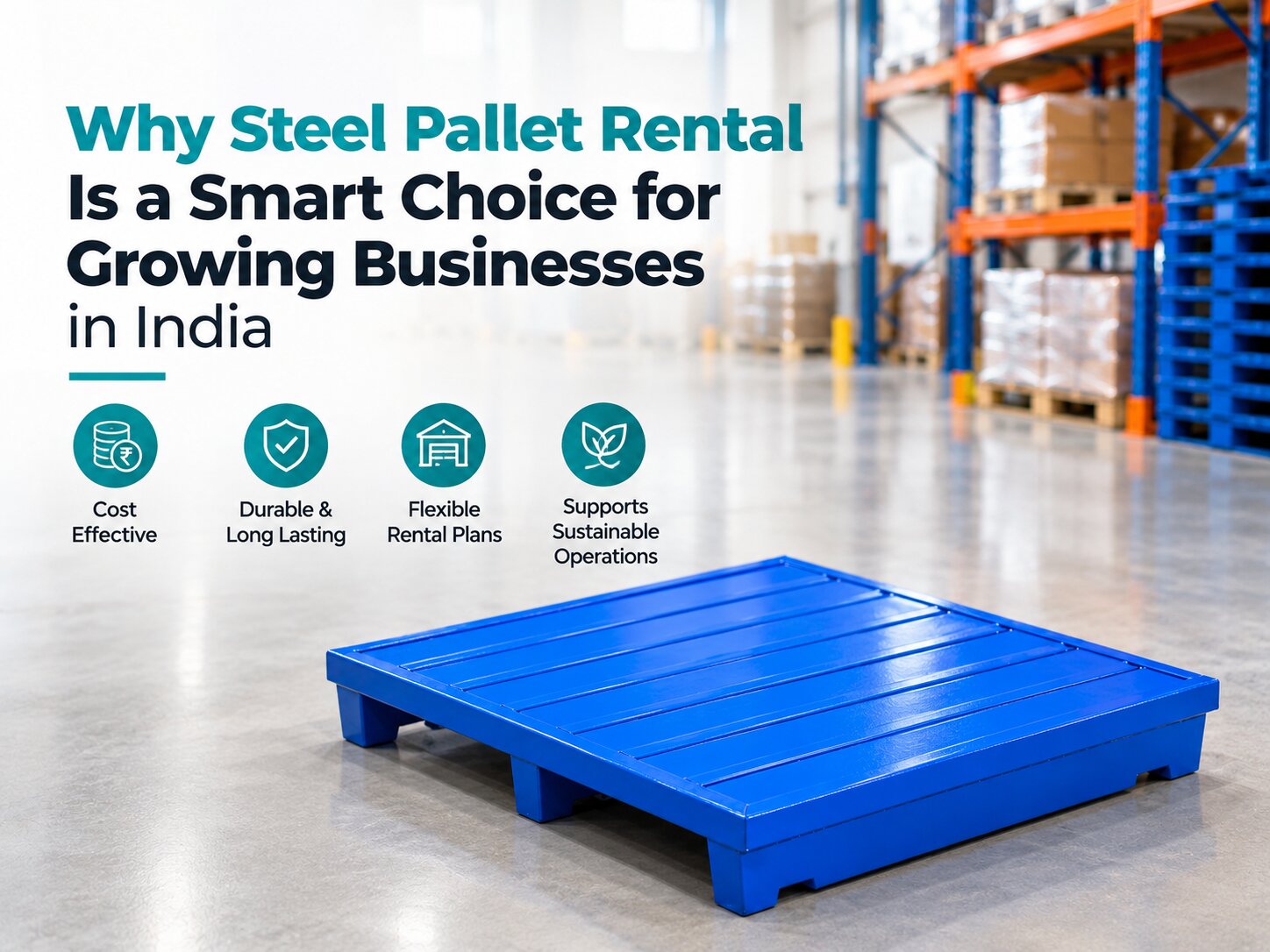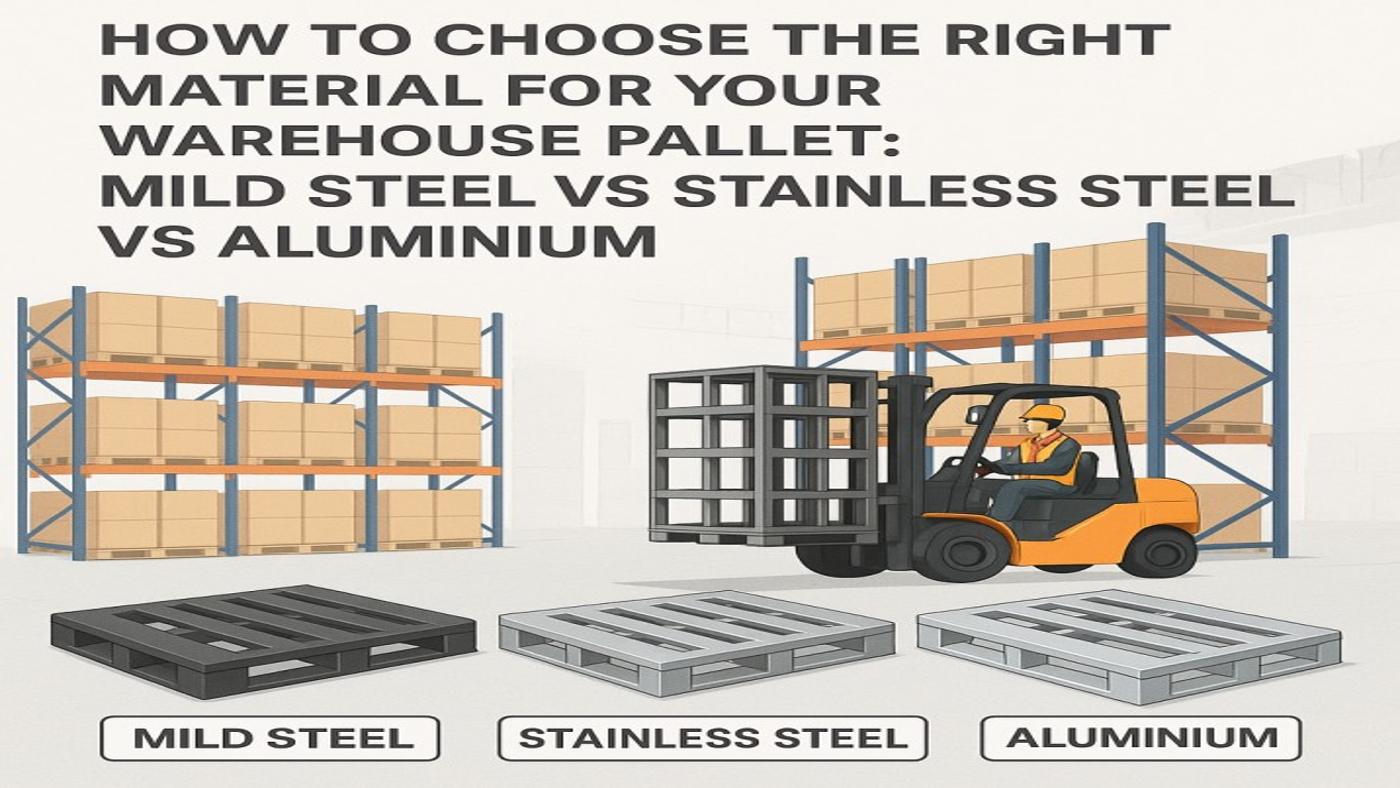
When designing or upgrading a warehousing system, one of the critical choices you’ll face is: what material should my pallets be made of? The right choice can influence cost, durability, maintenance, safety, hygiene, and lifecycle value. At Stakall, we Post Pallets from mild steel, stainless steel and aluminium.
Why material choice matters
Pallets are not just passive storage platforms; a warehouse pallet undergoes heavy loads, forklift traffic, potential racking, stacking, exposure to moisture/chemicals, and must last reliably. According to a guide on metal pallets:
Metal pallets make up less than 1% of the pallet market. Their application is limited to industries that have heavy loads and highly-intensive logistics systems where strength and durability are important. Choosing a sub-optimal material may lead to frequent replacements, higher maintenance, corrosion issues, hygiene problems (especially for food/pharma), or logistics inefficiencies.
Key factors to evaluate when selecting pallet material
Before choosing between mild steel, stainless steel or aluminium, you should assess and prioritise the following factors:
| Factor | Why it Matters |
|---|---|
| Load capacity & durability | How much weight the pallet must carry, whether heavy static/dynamic loads are involved. |
| Environment (moisture, chemicals, outdoor/indoor) | Corrosion and wear vary drastically by material and environment. |
| Hygiene and cleanability | Especially important for food, pharma, clean-room or chemical industries. |
| Weight of the pallet | Lighter pallets ease handling, reduce transport cost, and lower operator fatigue. |
| Lifecycle cost & maintenance | Balances initial cost vs long-term replacement/repair, corrosion protection, and coatings. |
| Compatibility with racking, forklifts & logistics flow | Material thickness, strength, and weight all affect safe and efficient handling. |
| Safety, regulation & industry standards | Sparks, hygiene, chemical exposure, and food contact may impose stricter requirements. |
| Customisation, finish and specific size/shape | Some materials are easier and more cost-effective to fabricate for custom pallets. |
Understanding these helps you map your warehouse scenario to the right material choice.
Here we break down each material: its strengths, limitations, and ideal use-cases.
Pros
Cons
Ideal use-cases
Stainless Steel
Pros
Cons
Ideal use-cases
Aluminium
Pros
Cons
Ideal use-cases
Side-by-Side Comparison Table
Below is a table summarising the key attributes of each material so you can compare at a glance.
| Attribute | Mild Steel | Stainless Steel | Aluminium |
|---|---|---|---|
| Typical initial cost | Low to Moderate | High | Moderate to High |
| Weight of pallet (for same footprint) | Heaviest | Similar or slightly lighter | Lightest |
| Load-bearing strength | Very good | Very good to excellent | Good (may need thicker sections) |
| Corrosion/rust resistance | Moderate (needs coating) | Excellent | Excellent (but softer material) |
| Maintenance requirement | Moderate to high | Low to moderate | Low |
| Suitable for hygiene/food/pharma | Yes (with correct finish) | Excellent | Good |
| Handling/manipulation ease | Moderate – heavier | Moderate | Excellent – lighter |
| Ideal for heavy static loads | Yes | Yes | Less ideal (unless engineered) |
| Ideal for weight-sensitive logistics | Less ideal | Moderate | Excellent |
| Lifecycle cost | Good | Very good | Very good |
| Fabrication/customisation ease | High | Moderate | Moderate |
How to Decide for Your Warehouse: Step-by-Step
Here’s a simple decision framework you can apply.
1. Assess your load and usage profile
2. Evaluate your warehouse environment
3. Consider your logistic priorities
4. Examine regulatory or industry compliance
5. Speak with a supplier/manufacturer
Looking to source reliable products at the best prices? Speak with our trusted supplier/manufacturer today and get customised solutions tailored to your business needs.
6. Compare the total cost of ownership
Don’t just compare the initial purchase price. Model: purchase + maintenance + replacement cost over say 10 years.Factor in handling cost (weight), downtime, and corrosion issues.
7. Decide and test
Possibly pilot one material in a typical segment of your operation, monitor performance, and scale accordingly.
Choosing the right warehouse pallet material for your warehouse isn’t a one-size-fits-all decision. By comparing factors like cost, durability, environment, logistics, and hygiene—and aligning them with your operational needs and budget—you can make the best choice for efficient warehouse manufacturing in India.
Partnering with a supplier like Stakall, who fabricates all three material types and offers customisation, can help you evaluate your specific trade-offs and select the optimal solution.
Contact us today for durable and efficient pallet solutions designed to enhance your warehouse performance and long-term productivity.
Q1. How much more expensive is stainless steel compared to mild steel for pallets?
A1. While exact numbers vary by region and specification, stainless steel typically comes at a higher upfront cost due to alloying elements (chromium, nickel) and fabrication complexity.
Q2. Is aluminium strong enough for heavy warehouse loads?
A2. Yes, aluminium can be engineered to carry significant loads, but because its absolute strength is generally lower than steel, the design may require thicker sections or reinforcing.
Q3. Can I use mild steel pallets outdoors or in humid conditions?
A3. You can, but you must ensure proper coating/finish and periodic maintenance. If the environment includes salt‐air, chemical exposure or frequent moisture, corrosion risk increases and you may incur higher maintenance or replacement costs.
Q4. For a food/pharma warehouse, which material is best?
A4. Generally, stainless steel is the most appropriate because of its high hygiene standards, corrosion resistance, ease of cleaning, and long life. Aluminium can also be considered depending on load and cost constraints.
Q5. How much weight savings can I expect by using aluminium instead of steel?
A5. While it depends on design, aluminium typically weighs roughly one-third of steel for comparable volume (though structural design may differ).
Q6. What about lifecycle cost—should I focus only on initial cost?
A6. No you should take a total cost-of-ownership view. Consider initial purchase price, maintenance/repair costs, replacement cost, downtime, handling cost (heavier pallets cost more in labour/energy), and potential productivity impacts.
Q7. Can I mix different material pallets in the same warehouse?
A7. Yes, you can. In fact many warehouses use different pallets for different zones (e.g., heavy load zone uses mild steel, clean-room uses stainless steel, export freight uses aluminium).
Q8. How long can I expect a metal pallet (steel or aluminium) to last?
A8. With good design, correct material choice and maintenance, metal pallets can last a decade or more. According to one source, metal pallets last “more than ten years twice or thrice what plastic and wooden pallets have to offer.