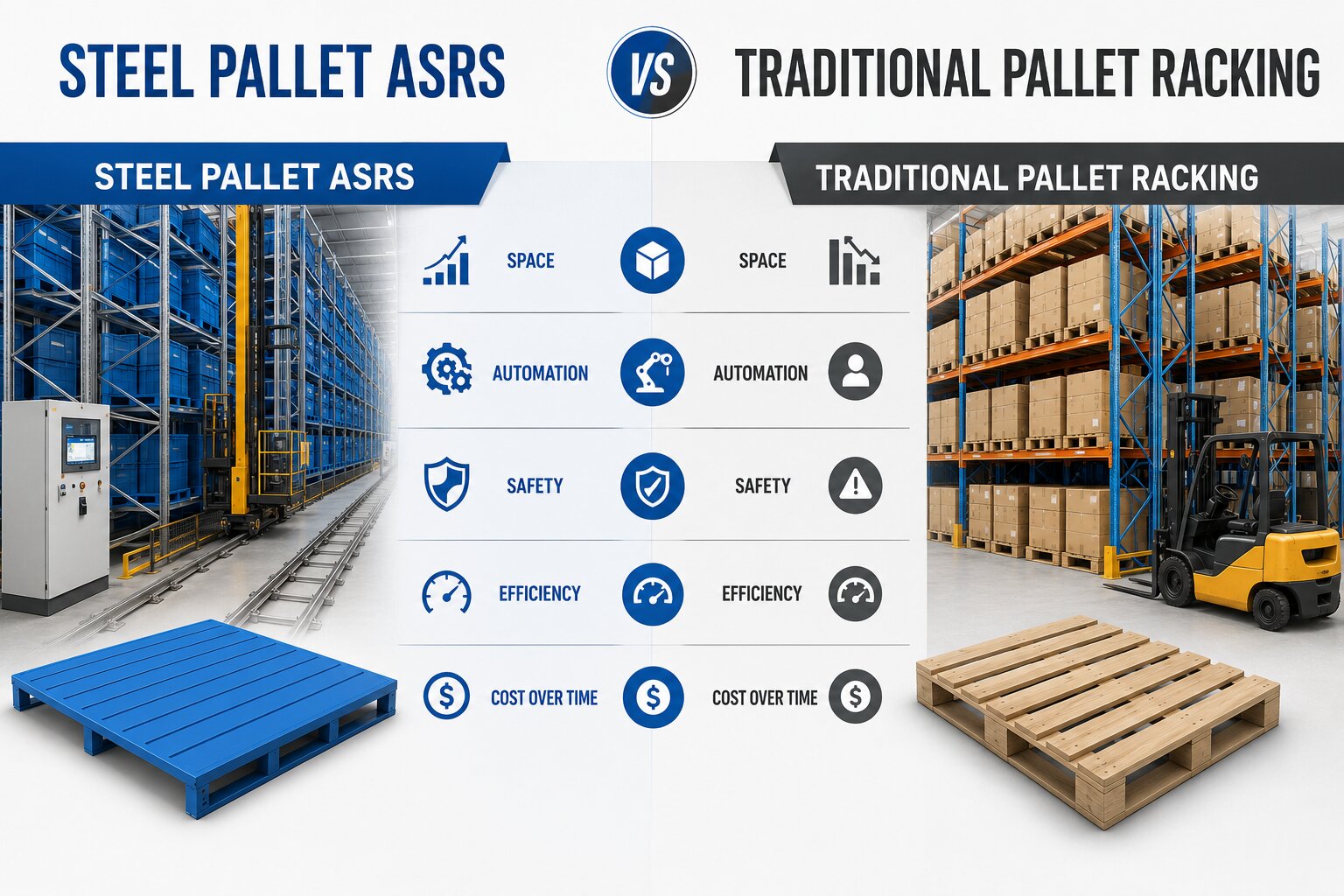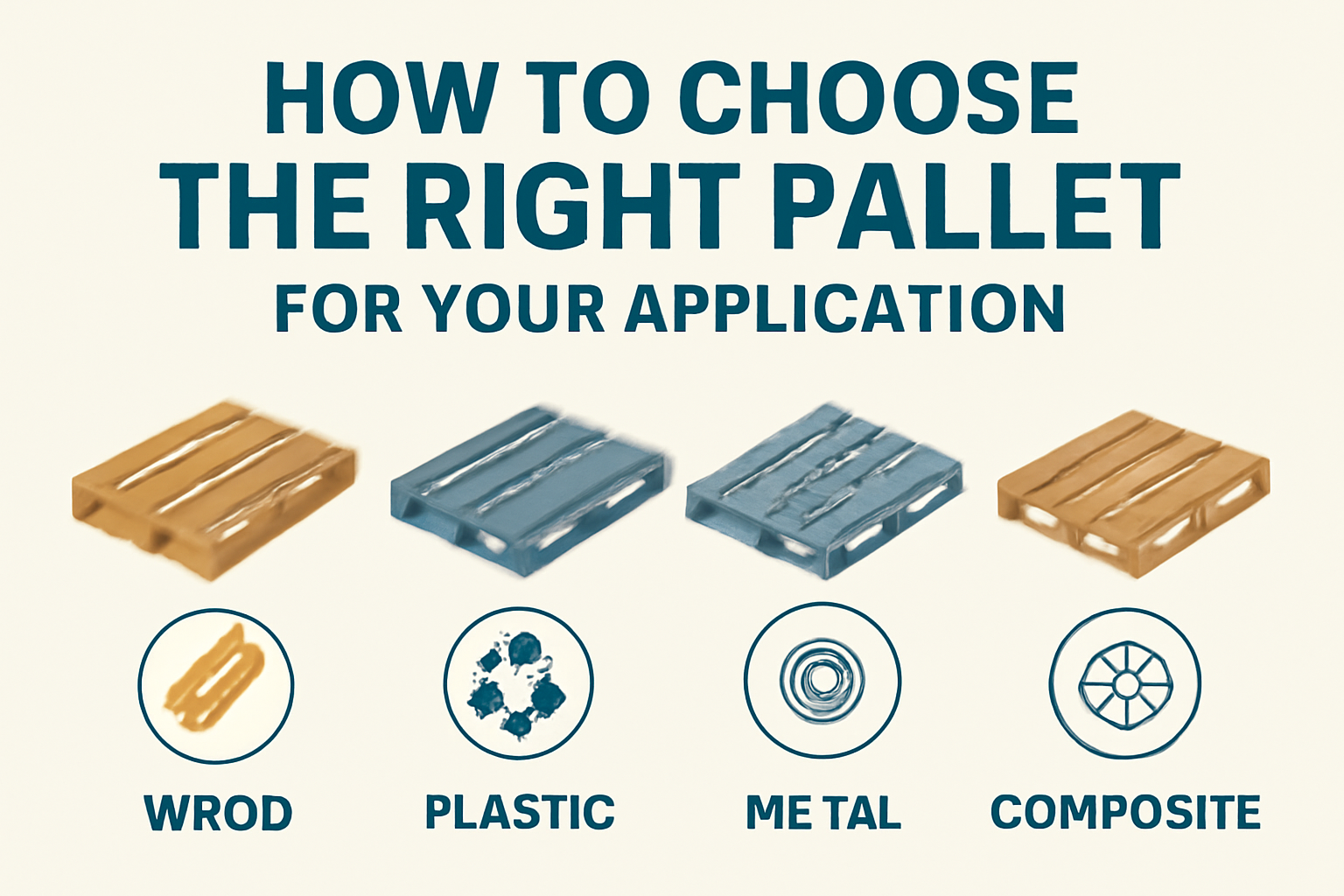
Selecting the right pallet is a critical decision for any warehouse, manufacturing unit, logistics operation, or distribution centre. The correct pallet type improves safety, optimizes storage space, enhances material handling efficiency, and reduces long-term operational costs. With various options available metal, wooden, plastic, and composite pallets understanding what fits your application is essential. Heavy-duty pallets are especially crucial for industries that deal with large, heavy, or bulky goods.
1. Understand Your Load Requirements
✔ Load Weight
• Light loads (up to 500 kg): Wooden or plastic pallets may suffice.
• Medium loads (500 – 1500 kg): Heavy-duty wooden or light steel pallets.
• Heavy loads (1500 – 3000+ kg): Steel or metal pallets are ideal due to superior strength and durability.
✔ Load Type
• Uniform loads: Almost all pallet types can handle them efficiently.
• Irregular or Point loads: Steel pallets are better as they resist bending and deformation.
2. Consider Your Storage System
✔ Racking System
If you use selective racking, drive-in racking, ASRS, or shuttle systems, choose pallets specially engineered for these structures.
• ASRS Systems: Prefer metal pallets for accuracy, consistent dimensions, and high rigidity.
• Drive-in Racks: Use pallets with strong bottom support and consistent entry clearance.
✔Floor Storage / Stacking
• Stacking 3–4 levels: Steel pallets prevent collapse and maintain load stability.
• Non-stacking: Choose lightweight pallets like plastic or wooden.
3. Evaluate Handling Methods
Your handling equipment significantly influences pallet selection:
✔ Forklifts
Choose pallets with:
• Adequate fork pockets
• Strong corner protection
• Anti-slip surfaces
✔ Pallet Jacks
Select pallets with:
• Lower entry height
• Smooth bottom design
✔ Conveyor or Automation Compatibility
For automated lines:
• For automated lines: Steel pallets are best due to precision and repeatability.
• Wooden pallets may cause jams due to inconsistent sizing.
4. Analyse the Operating Environment
✔ Dry Warehouse
• All pallet types can be used.
✔Wet or Hygienic Areas (Food, Pharma, Chemicals)
• Metal or plastic pallets are preferred.
• Avoid wooden pallets as they absorb moisture and can harbor bacteria.
✔Outdoor Exposure
• Steel pallets with powder coating or galvanization offer maximum life.
• Wooden pallets degrade faster outdoors.
5. Check Durability and Life Cycle
• Wooden Pallets: Low cost but short life; prone to breakage.
• Plastic Pallets: Longer life than wood but limited load capacity.
• Steel/Metal Pallets: Highest life cycle (5–10+ years), exceptional load capacity, best for heavy-duty operations.
6. Budget vs Long-Term Value
While wooden pallets are cheaper upfront, metal pallets offer the best ROI due to:
• Lower maintenance
• Reduced damage
• Higher safety
• Longer service life
Choose based on both purchase cost and total cost of ownership.
7. Industry-Specific Recommendations
| Industry | Recommended Pallet Type | Why |
|---|---|---|
| Automotive | Steel pallets | Heavy components, high durability |
| Pharma / FMCG | Plastic or steel | Hygiene, automation compatibility |
| Cold Storage | Steel | Performs well in low temperatures |
| E-commerce | Plastic or steel | Fast movement & automation |
| Heavy Engineering | Steel pallets | High load-bearing strength |
Types of pallets used in Automated Storage and Retrieval Systems (ASRS):
| Feature | Metal Pallets for ASRS | Plastic Pallets for ASRS | Wooden Pallets for ASRS |
|---|---|---|---|
| Material | Steel, Aluminum, Galvanized Steel | High-Density Polyethylene (HDPE), Recycled Plastic | Wood, Plywood |
| Load Capacity | High (can support heavy, bulky items) | Medium to High (varies with design) | Medium (typically supports moderate loads) |
| Durability | Very high, can withstand harsh conditions | Moderate to High, prone to UV damage | Lower, can be affected by moisture and pests |
| Weight | Heavy (best for heavy-duty use) | Lightweight | Medium to Heavy |
| Cost | Higher upfront cost | Moderate to High | Lower upfront cost, but may require more maintenance |
| Hygiene | Easy to clean, resistant to contamination | Easy to clean, ideal for hygiene-sensitive goods | Prone to absorbing moisture, harder to clean |
| Longevity | Very long lifespan | Long lifespan, but not as long as metal | Shorter lifespan, often needs replacement |
| Reusability | High (can be reused for a long time) | High, but may degrade over time | Limited reusability due to wear and tear |
| Resistance to Elements | Resistant to moisture, rot, pests, chemicals | Resistant to moisture, some plastics degrade under UV | Susceptible to moisture, rot, and pests |
| Flexibility in Design | Customizable (can be designed for specific needs) | Limited customization options | Customizable but not ideal for complex designs |
| Common Use Case | Heavy-duty industrial applications, high-density storage | Food, pharmaceutical, and clean-room storage | General-purpose, light to medium-duty storage |
| Best for | Automated warehouses with robotic handling, heavy and large loads | High-speed handling and hygiene-sensitive storage | Budget-conscious operations with moderate load needs |
Choosing the right pallet depends on a clear understanding of your workflow, load characteristics, environment, and handling systems. For high-strength, long-lasting, and automation-ready solutions, Heavy-duty metal pallets for ASRS especially in modern warehouses using ASRS, stacker cranes, and shuttle systems.
If you need assistance selecting the perfect pallet, Stakall can help with custom-engineered metal pallet solutions tailored to your application.
Contact Stakall Today to discuss your requirements, ask for a quote, or learn more about how we can enhance your material handling processes.
Q1. What is the standard pallet size for global shipping?
The commonly used standard pallet size in Europe is a Euro pallet measuring 800 × 1200 mm (31.5″ × 47.2″).
Q2. How much weight can a typical pallet carry?
It depends on the pallet type and design. For example, a Euro pallet typically supports a safe working load of ~ 1,500 kg and can handle up to ~ 4,000 kg under static stacking load conditions. Standard wood pallets (US standard) often support loads up to ~ 4,600 lbs (~ 2,086 kg) depending on construction.
Q3. Are plastic pallets better than wood pallets?
Plastic pallets have advantages: lighter weight, moisture and pest resistance, hygienic and easier to clean making them ideal for food, pharma, or clean‑room uses.
However, wooden pallets remain cost‑effective, easy to repair, and versatile for many general goods especially when hygiene is not a major concern.
Q4. When should we consider metal pallets?
Metal pallets are best when you need to transport or store heavy, bulky goods, or operate in harsh industrial conditions, or need long-term durability. They’re ideal for automotive, machinery, heavy equipment, or chemical industry shipments.
Q5. Is it okay to use different types of pallets together in one warehouse?
Yes, many warehouses successfully use a mix: wood for general items, plastic for clean/hygiene‑sensitive goods, and metal for heavy‑duty loads. The key is to ensure each pallet type matches the item's requirements (weight, hygiene, durability) and warehouse handling capabilities.